VOL. 07 | ISSUE 2 | June 2024
Trucks destined for Bagdad’s autonomous fleet are being retrofitted with a special conversion kit during regularly scheduled overhauls to make installation easier.
Bagdad Begins Installing Truck Equipment to Prepare for Autonomous Conversion
Haul trucks at Bagdad are being retrofitted with the new equipment that will make them “plug in” ready when the switch to autonomous driving begins next year.
Haul trucks suitable for conversion to self-driving are being sent to Bagdad from the Morenci and Sierrita mines via the Empire garage in Mesa, where the authorized Caterpillar distributor is installing the kits that will allow the switchover. Bagdad also is upgrading some of the trucks it has on site to stay on pace toward the switch to a fully autonomous fleet by early 2026.
When this first phase of the work is done, all of the internal components, the “guts of the command system,” will be in place on the trucks. To complete the conversion, a final layer will be added later consisting of the lidar, radar and the autonomous control cabinet, said Nicole Amiotte, Technical Superintendent-Bagdad.
While there has been a great deal of planning and behind-the-scenes work, conversion of the haul trucks is the first big equipment change that will allow the Bagdad mine to begin autonomous operations.
Tunnels Planned to Isolate Bagdad’s
Autonomous Operating Zone
Big changes are coming to the mine at Bagdad to prepare for the switch to an autonomous haul fleet, including a pair of one-way tunnels that will isolate the self-driving trucks from other vehicles, said Mark Elliott, Project Manager Engineer II for the Bagdad Autonomous Haulage System.
It is important to keep autonomous and manually operated vehicles separated as much as possible, Elliott said. People are unpredictable, and if an autonomous truck detects another vehicle it doesn’t recognize, it will default to the safest course of action, which typically is to slow down or stop.
When the autonomous conversion begins, the trucks will operate in a separate autonomous zone. Any vehicle, including light-duty trucks, will be equipped with a site aware kit, which is high-precision GPS positioning software, and continuously will send its location and speed back to the automated dispatching system.
The tunnels are needed because employees in their personal vehicles currently cross the haul road in what will be the autonomous zone to reach the mill, the heavy-duty truck shop and other important facilities. The tunnels will be built under the haul road to allow access to those facilities while keeping traffic separate from the roads used by autonomous vehicles.
Other changes at the site still are in the planning stages. There will be some technical equipment installed in the pit and along the roads to help the trucks navigate the terrain and communicate with the automated dispatching system. The existing mesh network will be fully upgraded and enhanced to ensure connectivity between all mining assets. The trucks will be equipped with high precision GPS and will continually send information to the automated dispatching system to help ensure the real world and the digital world match.
A pair of one-way tunnels will be built to isolate light-duty vehicles from the separate autonomous zone being created. A new command center that will house the equipment and personnel to coordinate the activities of the trucks also is planned. Work on those projects is expected to begin later this year.
Ultimately, there will be 33 self-driving haul trucks controlled by a system that will coordinate and control their movements to maximize efficiency.
Caterpillar conversions
The decision to convert Bagdad into an automated haulage site was announced last year.
The only trucks in the Freeport-McMoRan fleet that are compatible with the autonomous conversion kit are the Caterpillar 793-D models.
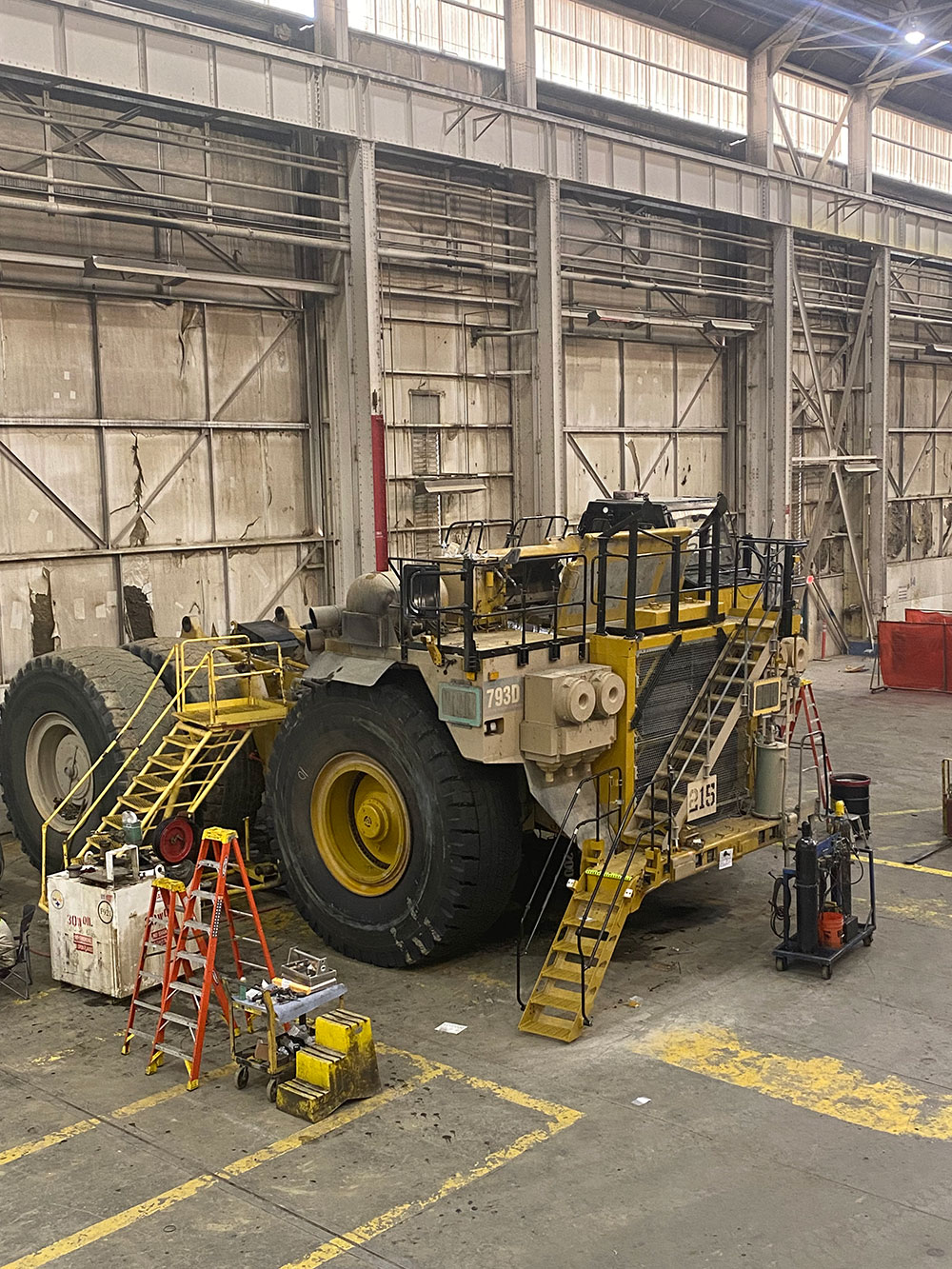
Bagdad had some D models on site but not enough to build the fully autonomous fleet. To fill out the numbers, an additional seven are being sent from Morenci and six from Sierrita, Amiotte said. First, they go to Empire’s Mesa facility for major maintenance overhauls, which affords the opportunity to install the wiring and equipment that will make them autonomous-ready when the time comes, she said. Installing the autonomous hardware is easier when the trucks already are disassembled.
An additional 17 trucks are being retrofitted in Bagdad. Workspace was made available there to keep the full-fleet conversion on schedule.
Empire mechanics are installing the conversion kits at both locations.
Haul Truck Conversion Prompts Bagdad Driver to Pursue Environmental Expertise
Bagdad’s conversion to an autonomous haul truck fleet was just the nudge Levi McIntyre needed to get his career as an environmental scientist back on track.
McIntyre graduated from Washington State University in 2021 with a degree in earth and environmental sciences. He was living in Washington when he heard from his uncle about the good job opportunities at the Bagdad mine.
At the time, there were no openings for environmental positions that would allow him to put his college degree to work.
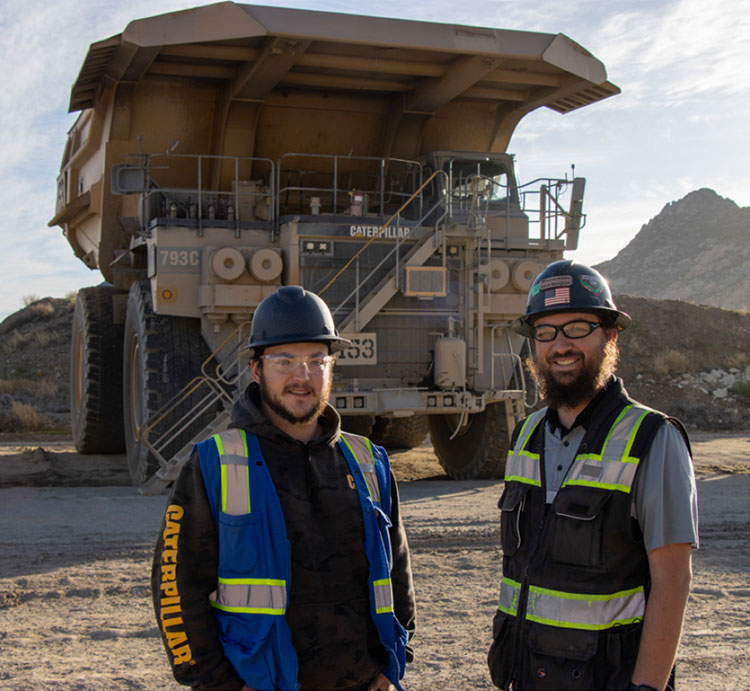
But there were opportunities for haul truck drivers. McIntyre applied, thinking if nothing else, he could use that to eventually move into an environmental job within the company. It turns out driving the haul trucks was more fun than McIntyre expected, which got him thinking maybe he should consider a different career path.
“For me, I always wanted to find something where I could utilize my degree,” McIntyre said. “The truck driver job was kind of a foot in the door. But then I kind of started to like the job because you are in this ginormous two-story house, and you are the king of the road. So, I ended up liking the job and thinking, ‘I’m going to stay here and try to work my way up to a supervisory role in mine ops.’”
‘Job shadowing’ to explore opportunities
Shortly after McIntyre was hired as a driver in March 2023, the plans were announced to convert Bagdad into an autonomous haulage site by early 2026. As part of the company’s commitment to help the drivers find new careers, McIntyre met with Zach Maughan, Autonomous Mine Superintendent-Bagdad.
Maughan is helping the drivers transition into other jobs with the company, either other positions at Bagdad or – for those who prefer – truck driving jobs at other mines.
Maughan has been holding one-on-one meetings with every haul truck driver to help them explore career opportunities within the company. The drivers are allowed to do “job shadows,” where they spend the day with employees in other occupations to see if it is something they would like to do. Training also is available for employees to make the transition to other jobs they could qualify for.
Improving the employee experience when it comes to hiring, training and retention is one of the strategic themes that will help the company safely achieve its 2024 targets by being the best at the basics.
Redirecting employee skills
There were about 200 truck drivers at Bagdad when the plan to go autonomous was announced, Maughan said. Many have since taken other jobs in mine operations, for instance as shovel operators or working in the mill. Some have accepted positions at other company sites. As the autonomous fleet is rolled out, there will be new jobs created to keep that technology functioning.
The bottom line is that while the truck driving positions are going away in Bagdad, the skills and experience of the people working in them remain valuable to the company, he said.
“We have a lot of vacancies here at Bagdad, and we don’t want to lose anyone,” Maughan said. “If it is something they’d like to do, we are working with them to start developing those skills now so that when truck driver responsibility is no longer needed, we can help transition them to a new role. Our goal is to help develop the people to have the skill sets in those other roles so that we can keep them here. We love the people that we have, so we are trying to continue to build that strength across different departments and across different roles and responsibilities.”
Finding haul truck drivers with college degrees is not the norm, but it also is not unique, Maughan said. For McIntyre, the career transition came at a good time. A position in Bagdad’s Environmental and Sustainable Development Department opened, and he was hired as an Environmental Scientist I last November. The company provided him with the training he needed, and he is working on his ISO-14001 Environmental Management Systems certification.
“There’s a lot of support here,” he said of his new career. “I love it.”
That said, there are still times he misses being in the cab of the haul truck.
“There’s something about sitting 15 feet in the air,” he said. “You’ve got a big 16-cylinder engine screaming right next to you. It was fun.”
Life cycle rebuilds
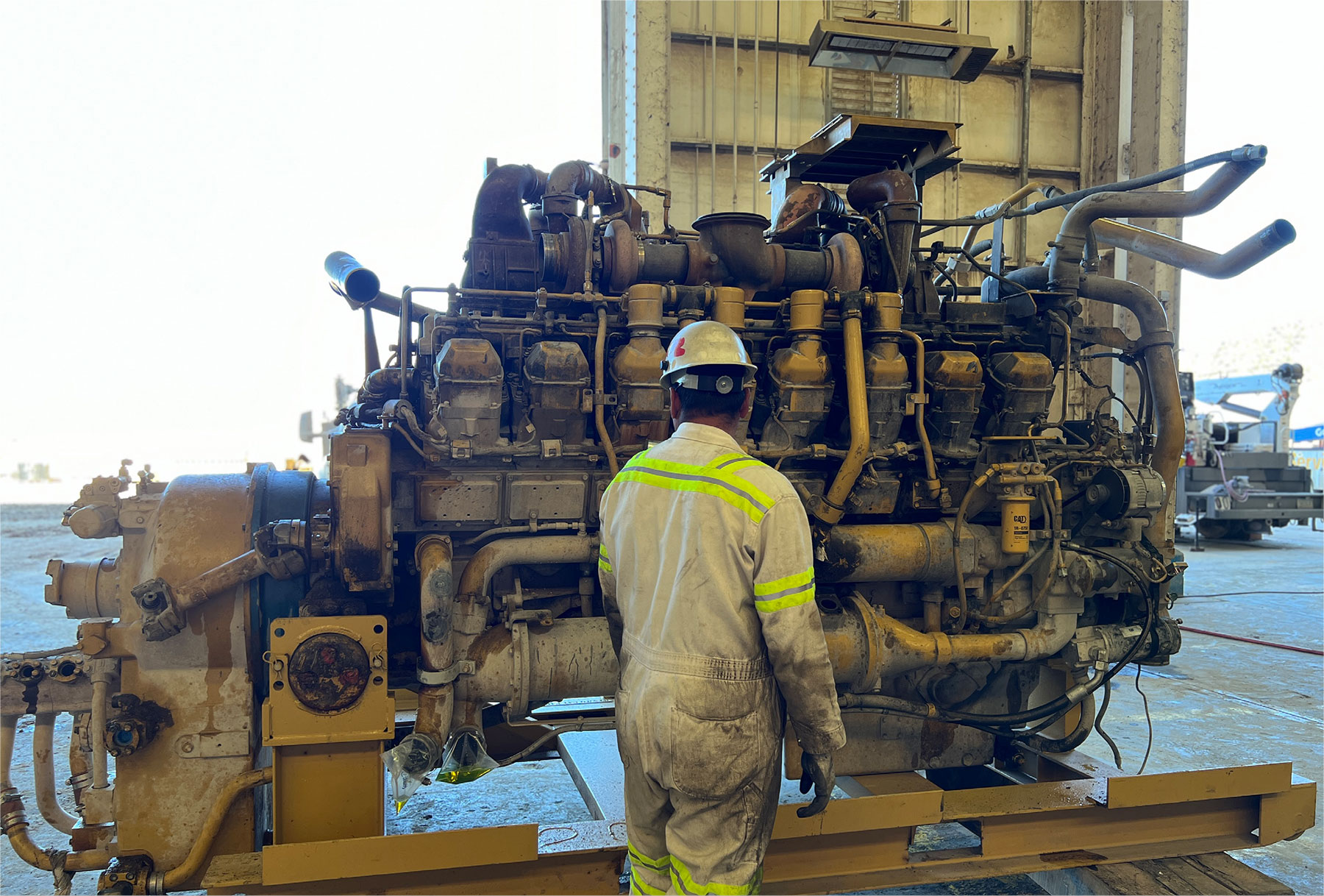
The trucks going through Mesa already were scheduled for full maintenance overhauls, which includes replacing the chassis and operator cab, rebuilding the engines and other major powertrain components, and a full recondition of all machine subsystems, said Mitch McInelly, Superintendent-Truck Rebuild in Phoenix. In addition to the electronics that will allow the truck to navigate and be remotely controlled, a lot of mechanical work is needed, he said.
A completely separate steering system is added so the trucks can be used in autonomous and manually driven modes. That requires new hydraulic valves, pumps and other mechanical systems in addition to the electronics needed for autonomous control.
The braking system is redone so it is controlled electronically. Front-wheel assemblies also have speed sensors installed to precisely monitor the movement of the vehicles.
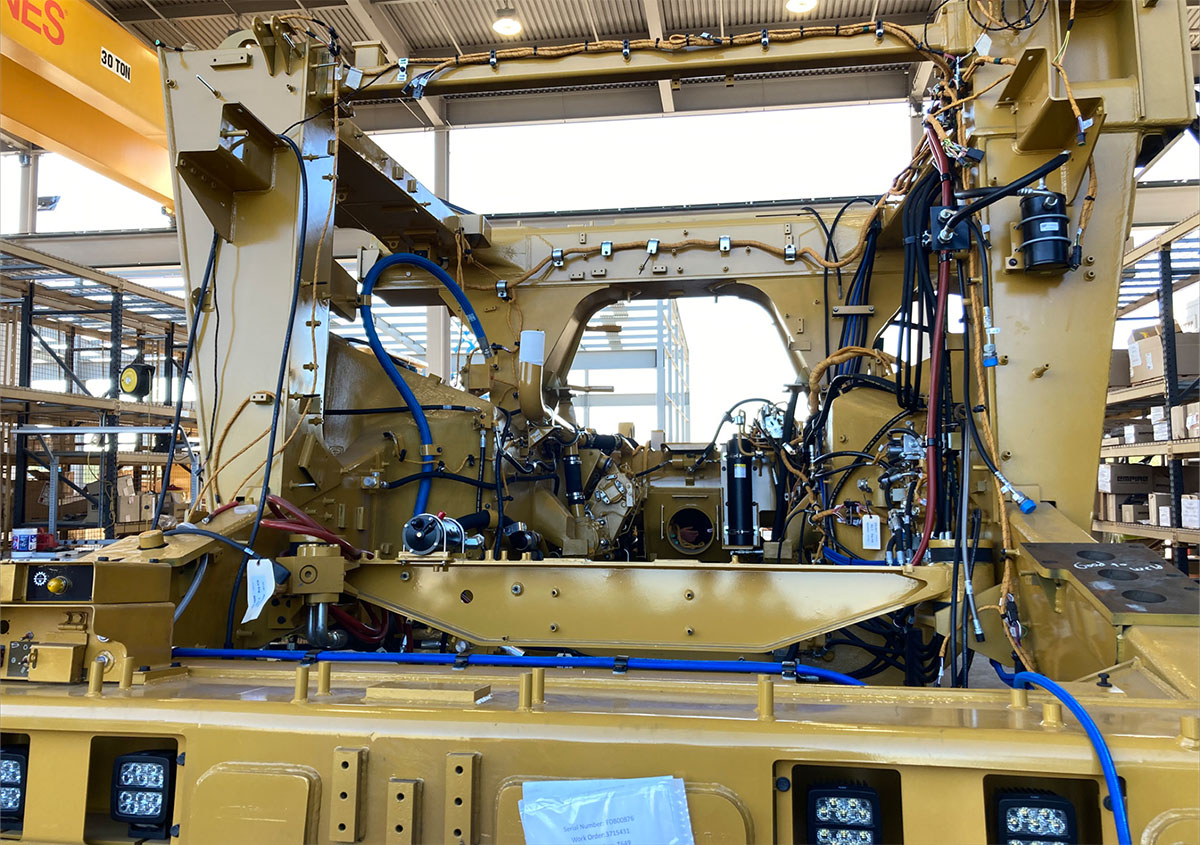
Some of the trucks that were in Bagdad did not need to be overhauled, so it made more sense to do the conversions on site rather than go through the time and expense to tear them down and ship them to Mesa to have the work done, McInelly said.
The trucks will continue to operate in manual mode with the conversion kits installed, until it comes time to switch them over to autonomous control. With the kits installed, that will be a matter of connecting some “plug and play” external components like the autonomous control cabinet, the onboard “brains” of the system which will control the vehicle, he said.
Gaining user acceptance
The switch to autonomous control will happen in phases, Amiotte said. It will start early next year with a single truck which will allow the system to be tested to ensure the trucks are responding to commands and operating safely.
The next phase will be to add more trucks – three to eight initially – that will operate only on the day shift to allow workers who will interact with the trucks to get used to them. While the haul trucks will be self-driving, other equipment like shovels and light vehicles will continue being operated by people. The user acceptance zone will not be under regular production pressures to allow people to get comfortable working around the autonomous trucks.
There will be a transition phase in which there will be a mix of autonomous and human-driven trucks operating on major haul roads, though not in other areas like shovels and stockpiles. Full autonomous haul truck operation is scheduled for the first quarter of 2026.