
VOL. 08 | ISSUE 2 | Summer 2025
Full Speed Ahead
Bagdad Autonomous Haulage Fleet Driving
Toward Full Site Conversion
Ahead of schedule, the Bagdad pit now has 15 driverless haul trucks moving material alongside the 25 manned vehicles still running at the site as of the end of June.
Autonomous haul trucks are being loaded by three shovels in a separate part of the pit to help limit interactions with manned vehicles, said Zach Maughan, Mine Superintendent, Autonomous-Bagdad.
The plan is to hold at 15 driverless trucks until mid-July to give people working on the autonomous system more time to learn its operational nuances. Testing, familiarization and troubleshooting will continue as more trucks are added that month. By August, about 20 to 25 autonomous vehicles are expected to be operating, with the target of having all 33 haul trucks on site driverless by year’s end. The remaining seven trucks not transitioning to autonomous will be available for transfer to other sites.
The schedule for adding autonomous trucks was accelerated in part to help ensure maximum use of the haulage fleet, said Mark Elliott, Project Manager-Engineering II. Bagdad stopped recruiting new haul truck drivers in March, and many existing drivers have been retrained and gone on to other positions. Rather than leave trucks idle for lack of a driver, the autonomous vehicles were put into service.
“As the mine has transitioned people into their new roles, we are asking former operators to assume more responsibility than they’ve ever had before.”
MARK ELLIOTT | PROJECT MANAGER-ENGINEERING II
While the trucks don’t have people in them, keeping them running takes a lot of training and expertise from both operations and maintenance personnel, Elliott said. Former drivers are monitoring the trucks and plotting their movements from a newly opened operations control center.
“As the mine has transitioned people into their new roles, we are asking former operators to assume more responsibility than they’ve ever had before,” Elliott said. “A former equipment operator is now in the control room basically managing the flow of traffic on the autonomous side and directly supporting the day-to-day achievement of our mine plan.
“That’s a fair amount of responsibility to successfully and efficiently manage our truck flow on top of the whole new system without an operator in the truck. So, there are some growing pains there.”
Running an autonomous fleet also requires meticulous maintenance, said Bryan Lucas, Superintendent, Mine Maintenance-Autonomous Haulage. The trucks operate within tight specifications set by the original equipment manufacturer. While a driver might be able to compensate for some minor maintenance issue until it can be corrected at the end of the shift, the autonomous truck will “fail to safe,” meaning it just shuts down.
The same is true if something unforeseen occurs, such as a temporary interruption of a communications signal. A driver can keep going until the signal is re-established if it’s safe to do so. The autonomous truck will bring itself to a stop automatically.
“With the autonomous equipment, things have to work within their normal bounds,” Lucas said. “If it’s not what it expects, it’s going to fail to safe. Everything has to be what the truck expects to happen, and if it’s not, the truck’s going to stop or react to it. It definitely puts more emphasis on planned work and executing to the plan versus troubleshooting as you normally would.”
Using driverless trucks also puts different responsibility on shovel operators. Normally, the drivers know when to pull in and out of the shovel area. When one truck pulls out, the driver of the next one pulls in. With driverless haul trucks, it is up to the shovel operator to signal the trucks held in a queue to come in and designate exactly where to back in using a touch screen map inside the cab.
“The trucks only go where they are told,” said Benny Corbell, Mine Manager-Bagdad. “So, the control is with the shovel operator who says, ‘this is where I want the truck to back up,’ and makes a virtual point inside the system. It’s an imaginary point but it drops it within the system, and that truck knows exactly where to pull in and where to stop.”
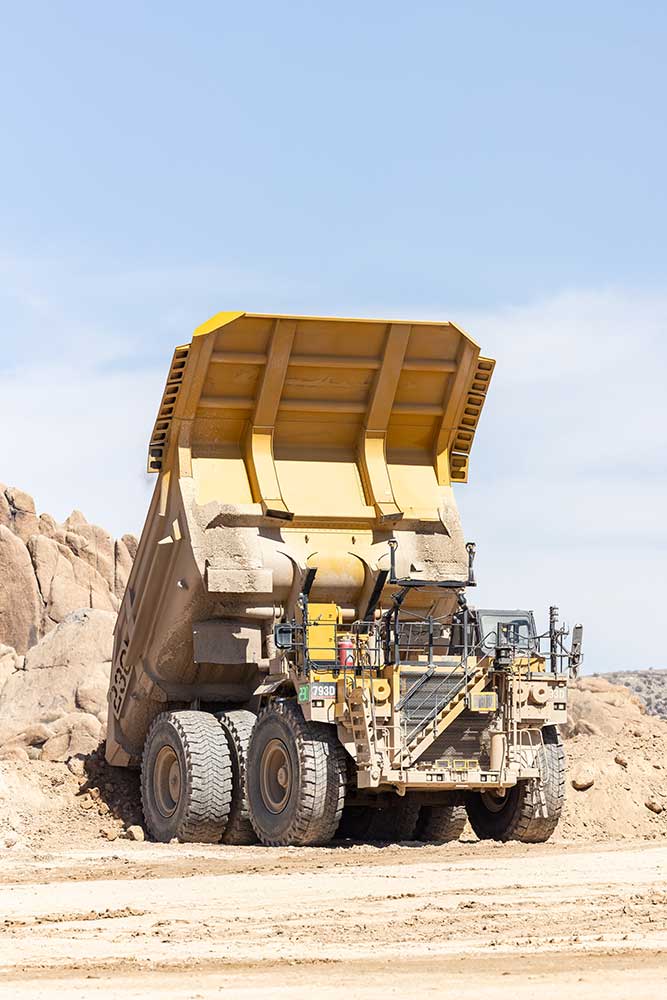
Autonomous haul trucks at Bagdad may be driverless, but they still require skilled operators to plan and monitor their activities.
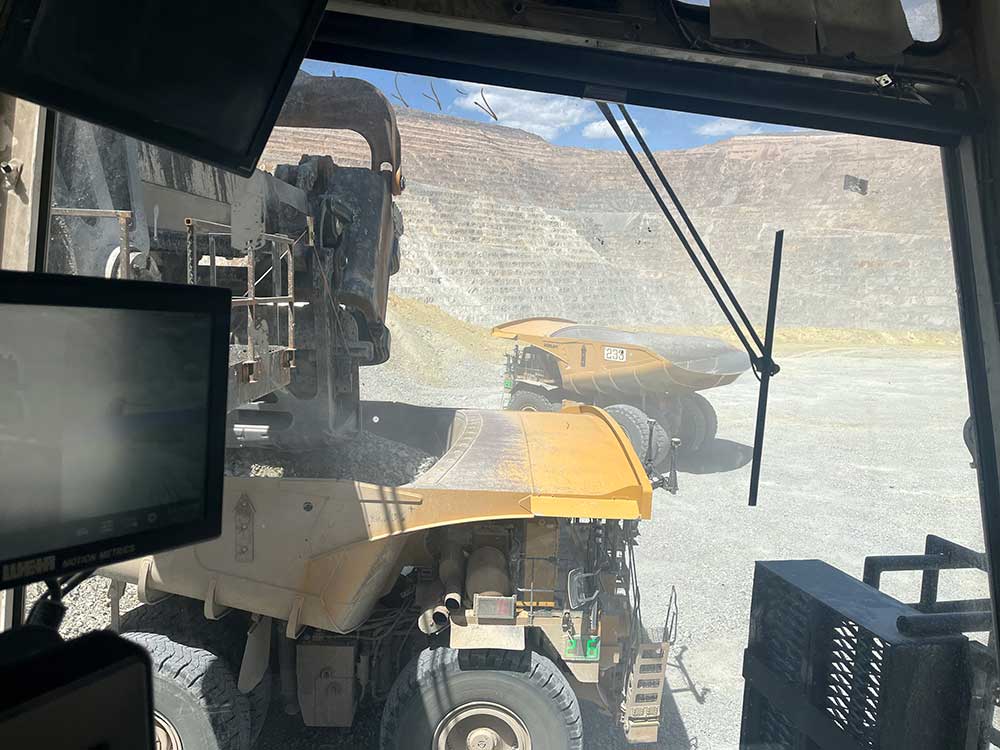
Loading autonomous haul trucks puts more responsibility on shovel operators to maneuver the vehicles into position.
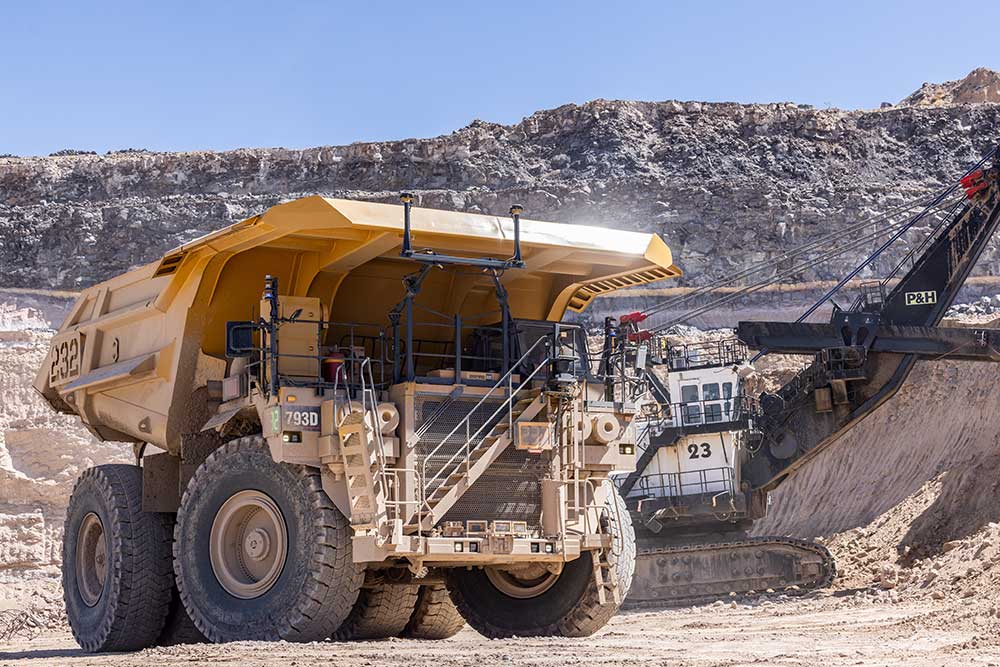
Three shovels are being used to load autonomous haul trucks at Bagdad.