
VOL. 08 | ISSUE 2 | Summer 2025
Right on Track
A Hands-on Approach to Logistics Marks a
New Era for Freeport and its Partners
For nearly two centuries, railroads have powered progress in America – moving people, products and raw materials across the country. At Freeport, that legacy is not just history – it’s part of the company’s future.
In a strategic shift, Freeport is taking direct control of rail logistics for one of its key supply chains through a new agreement with Apache Nitrogen Products Inc. (ANPI), a longtime blasting agent supplier in which it holds a partial stake, and its rail partners.
Rail has long been a backbone of Freeport’s shipping network, handling around 50,000 loads of copper concentrate, sulfuric acid and more each year. Now, with the company managing the rail transport of materials critical to the production of Apache Nitrogen’s prilled ammonium nitrate (ANPAN), those numbers are set to rise.
The move is intended to strengthen delivery reliability, reduce truck traffic, improve safety on the roads and support Freeport’s broader push for more sustainable logistics.
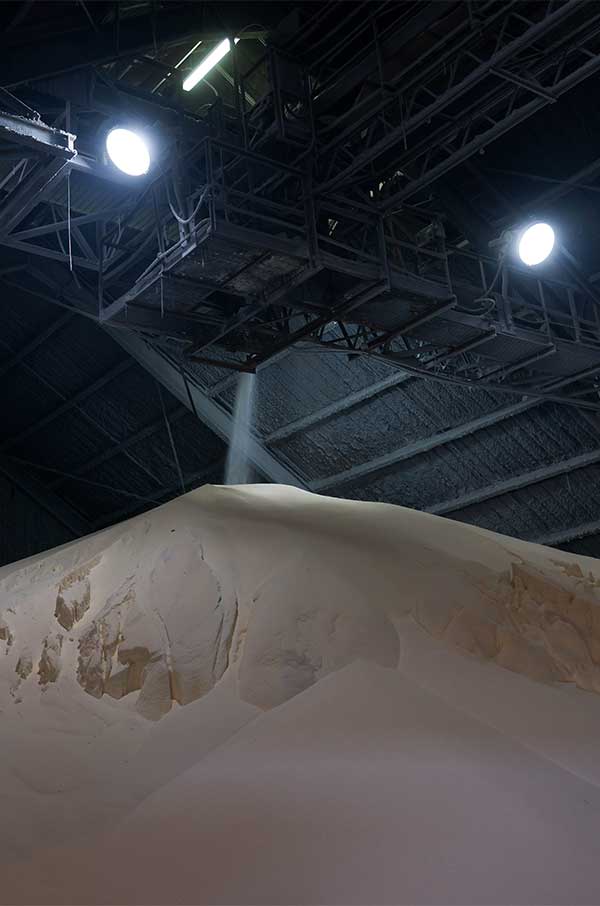
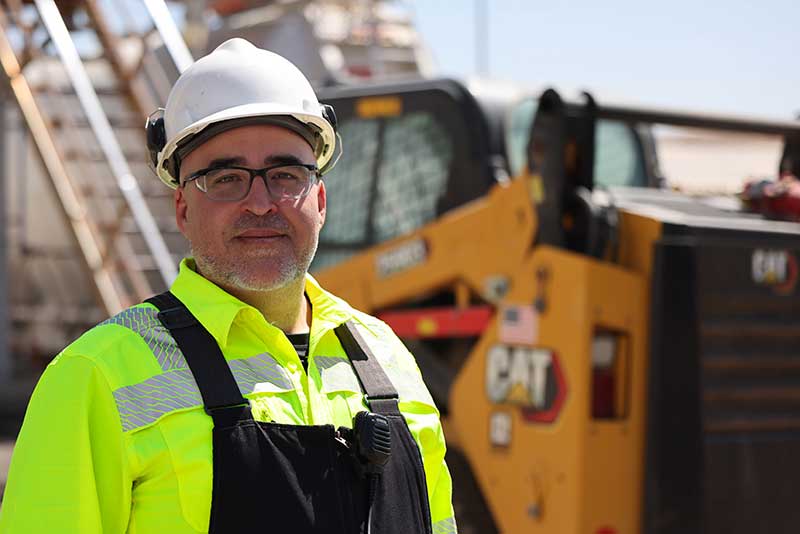
Jose Martinez, ANPAN Truck Loader-ANPI, is one of the nearly 70 employees who help supply all of Freeport’s ANPAN.
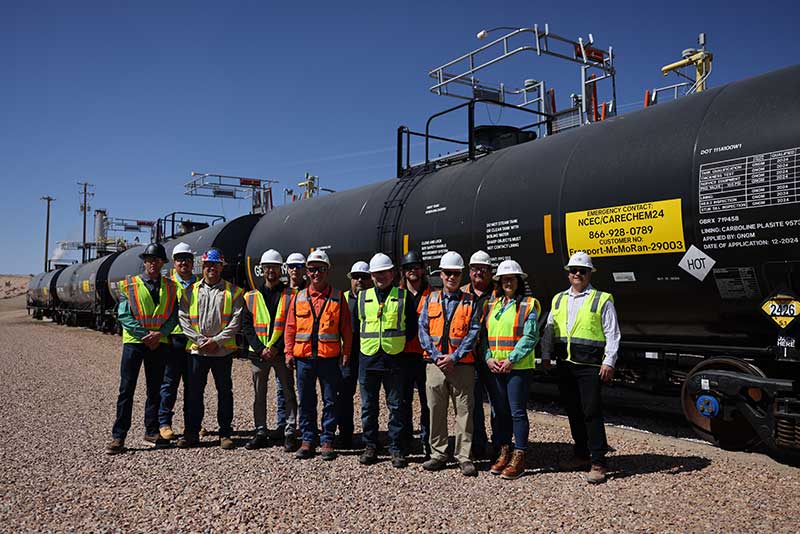
This “new era” for ANPI required the cooperation of Freeport, Southwest Energy and its rail partners.
With a century supporting and supplying the mining industry in the southwest, ANPI’s long operational history was what set the stage for this next act. Rather than replacing aging assets, the company looked to safer, more reliable and less expensive alternatives. Ultimately, ANPI decided to ship in ammonium nitrate solution by rail rather than continue using an on-site ammonia supply.
That shift meant adding nearly 2,000 additional rail shipments each year, as well as the decision to lease more than 300 new rail cars to help meet that need.
It also meant coordinating the scheduling, safety and other logistic details of those new cars, working in close coordination with the San Pedro Valley Railroad, the ANPI’s “last mile” provider and longtime rail partner Union Pacific.
“Union Pacific appreciates the long-standing partnership we enjoy with Freeport-McMoRan and the new rail volume that initiated this year for ANPI,” said Norm Miller, Sales Director-Union Pacific Railroad Marketing & Sales. “We continue to stay focused on our key objectives of safety, service and operational excellence which allows us to deliver a reliable transportation product. We’re excited and committed to the new FMI-ANPI business and look forward to delivering on your service needs.”
However, merely getting everyone on board with this new plan was only the beginning.
“Union Pacific appreciates the long-standing partnership we enjoy with Freeport-McMoRan and the new rail volume that initiated this year for ANPI.”
NORM MILLER | SALES DIRECTOR | UNION PACIFIC RAILROAD MARKETING & SALES
As Bruce Nickle, Director-GSC Logistics and Transportation, said, while the key players were willing, ANPI had never handled that kind of volume.
That’s when it reached out to Freeport.
“Freeport already has some of the best transportation logistics for its internal needs,” Harper said. “Now, we can help extend that same reliability to our suppliers. The opportunity to build stronger relationships was just an added benefit.”
And the benefits don’t stop there, as the arrangement allowed the company to negotiate better rates and reduce the number of trucks on the road. Harper said Freeport also right sized its team for the road ahead.
And in that, he sees the real opportunity.
“We spent a lot of time getting the right people and skills to achieve this,” Harper said. “Now, we’re on the right track to take on even more third-party logistics opportunities, deliver the quality Freeport is known for and see just how far this team can go.”
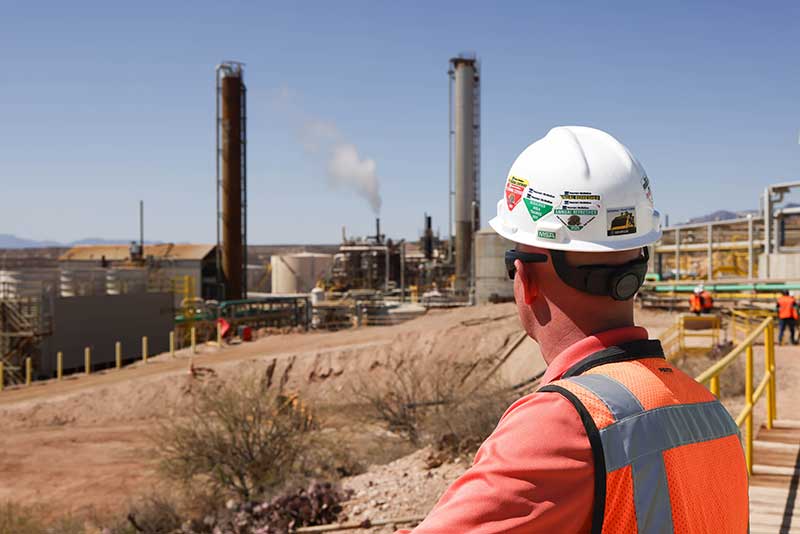
By shipping in ANS directly, ANPI can retire older parts of their facility, like their acid plant and ammonia storage.
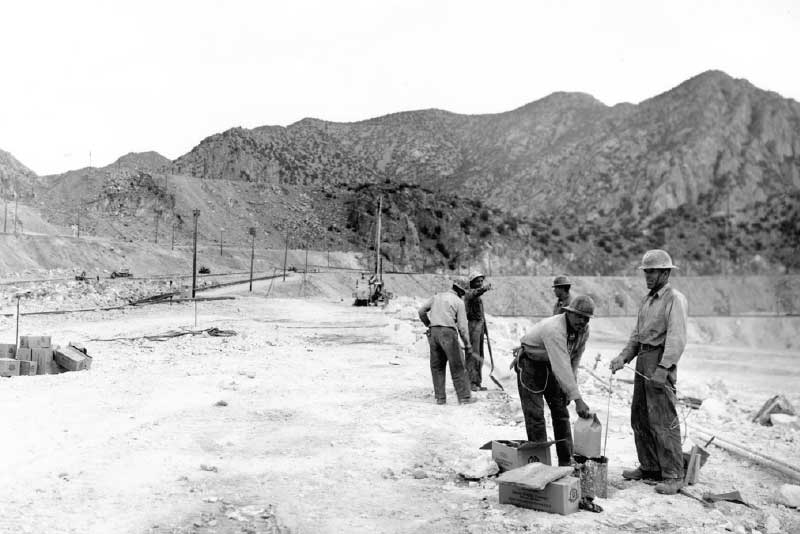
In 1944, two powdermen load a drill hole at Morenci with blasting agents from Apache Powder Company.
A New Era for Old Friends
Founded in the 1920s, the early years of the Apache Powder Company were spent using black powder and nitroglycerin to produce explosives for the mining industry. In the 1980s, the company completely transitioned to ammonium-nitrate-based blasting agents and soon rebranded to ANPI.
At one point, close to 20 mining companies had stake in ANPI, though that number gradually whittled down, with only a few key players remaining in the 2000s.
It was around this time that Freeport’s Dan Kravets, Senior Vice President and Chief Commercial Officer, became involved.
Serving as Chairman of the Board at ANPI, Kravets played a key role in shaping it into the company it is today. Kravets negotiated a new partnership that saw control of the company consolidated down to joint ownership between just Freeport and Southwest Energy. He also oversaw an award-winning wetlands project to remediate the impacts of ANPI’s historic practices.
That control and the remediation responsibilities that came with it were to help ensure the continued viability of ANPI – and Freeport’s ANPAN supply.
“ANPI’s low-density ANPAN is specifically designed for Freeport’s North American operations,” Kravets said. “ANPAN’s density provides more energy in every blast, allowing
Freeport to achieve its target particle size at the lowest cost per ton. We are leveraging the competitive advantage we achieve with ANPAN in our work with Freeport’s Reinvent Mining initiative to reduce costs and increase recoveries in the Americas. However, ANPAN does not travel well long distances, which is why we manufacture the product in Arizona close to Freeport’s operations.”
That convenience has not been overlooked or underutilized.
According to another board member, Freeport’s Frank Van de Wille, General Manager-Site Sustaining Capital, 100 percent of ANPI’s ANPAN goes to Freeport. And, thanks to a shared vision that has seen the company undergo a sizable transformation, he anticipates that ANPI will continue to support mining for another 100 years.
“The changes and investments made over the past two years are critical to ANPI,” Van de Wille said. “The success of this project is a testimony to the collaboration between ANPI, Freeport, Southwest Energy, LSB Industries and our freight partners.”
Kravets added that Southwest Energy has been Freeport’s long-term business partner since 1973, and that it was a joint vision to find an arrangement that satisfies Freeport’s corporate objectives and meet the needs of SWE’s customers that is ushering in a “new era” for ANPI.
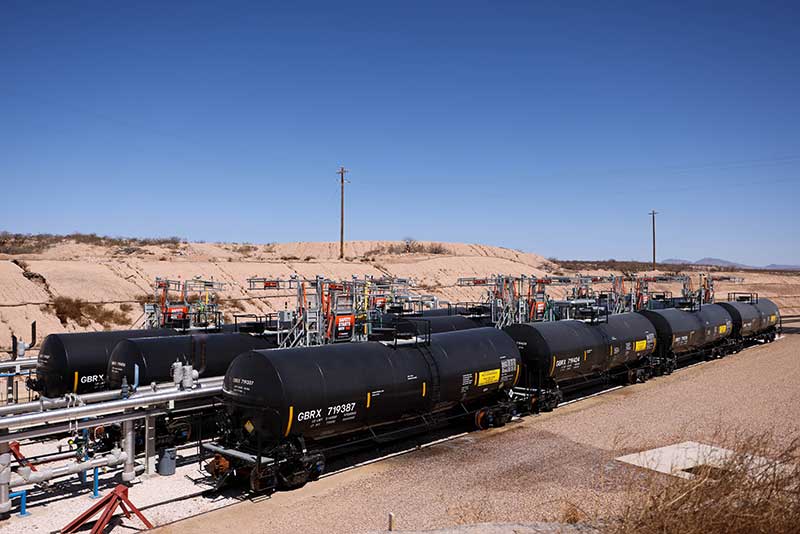
For this initial five-year term, Freeport leased 348 new railcars and will manage their logistics for ANPI.
Transportation, Logistics an Around-the-Clock Operation
Twenty-four hours a day, 365 days a year, logistics and transportation teams move material to keep our mines running and projects going and to fulfill copper and molybdenum sales orders.
Operational reach is global where supplies move by land, sea and air. The logistics network is complex with teams in North America, Europe, Peru, Chile, Australia and Indonesia collaborating to support Freeport. The sun truly does not set on Freeport material moving around the globe.
The Phoenix team works with all mines and the smelter in Arizona, New Mexico and Colorado as well as corporate teams and processing plants in Iowa, Stowmarket, Rotterdam and El Paso. They also consolidate and ship supplies to the Manyar smelter and our Indonesian operations. All of this is done by working with transportation carriers and logistics companies that pick up or deliver material to locations both domestically and internationally.
Safety, security and compliance are paramount, touching every step of the supply chain process. In North America, the team on average coordinates 152,000 truckloads, 50,000 rail cars, 4,400 containers, and 300 hot shots and expedited shipments a year. These numbers are much higher when adding supplier-managed shipments and will continue to grow with planned mine expansions and Leach to the Last Drop and Reinvent Mining programs. All of this movement and physical activity requires a focus on safety and compliance. It takes everyone in the network to do their part to remain safe on company property, public roads or on rail lines.
Members of the Freeport transportation and logistics teams know they are only as good as their last shipment and must execute reliably and responsibly to win the confidence of the company and partners daily. Anyone can ask a supplier to ship; that is the easy button. But it does not necessarily provide the best value or success for the company. The logistics and transportation teams help our internal customers and Apache Nitrogen – as explored in one of the features of this issue of “The Miner” – make the best decisions to support the business.
To help develop our company’s long-term growth and profitability, the teams collaborate and focus on continuous process improvement and short-, mid- and long-term planning. Transportation operates in public spaces and operates in a growing economic region. We must continue to change logistics networks and be good neighbors. Embracing innovation and technology will help. The company recently implemented its first transportation management system which will expand over time. This capability is transformative.
It is truly remarkable the level of collaboration and partnership developed with both internal and external stakeholders. When you combine total spend, volumes and tonnage moved, we equate to a decent sized logistics company in just North America. Of course, it is much larger when you include other regions where we operate.
The company’s logistics model is challenging but was proven effective during COVID and is working today in a rapidly changing global trade environment. What makes it work is good people and partners who are responsible, reliable and competent. I am grateful, and I sleep better at night knowing we have them.
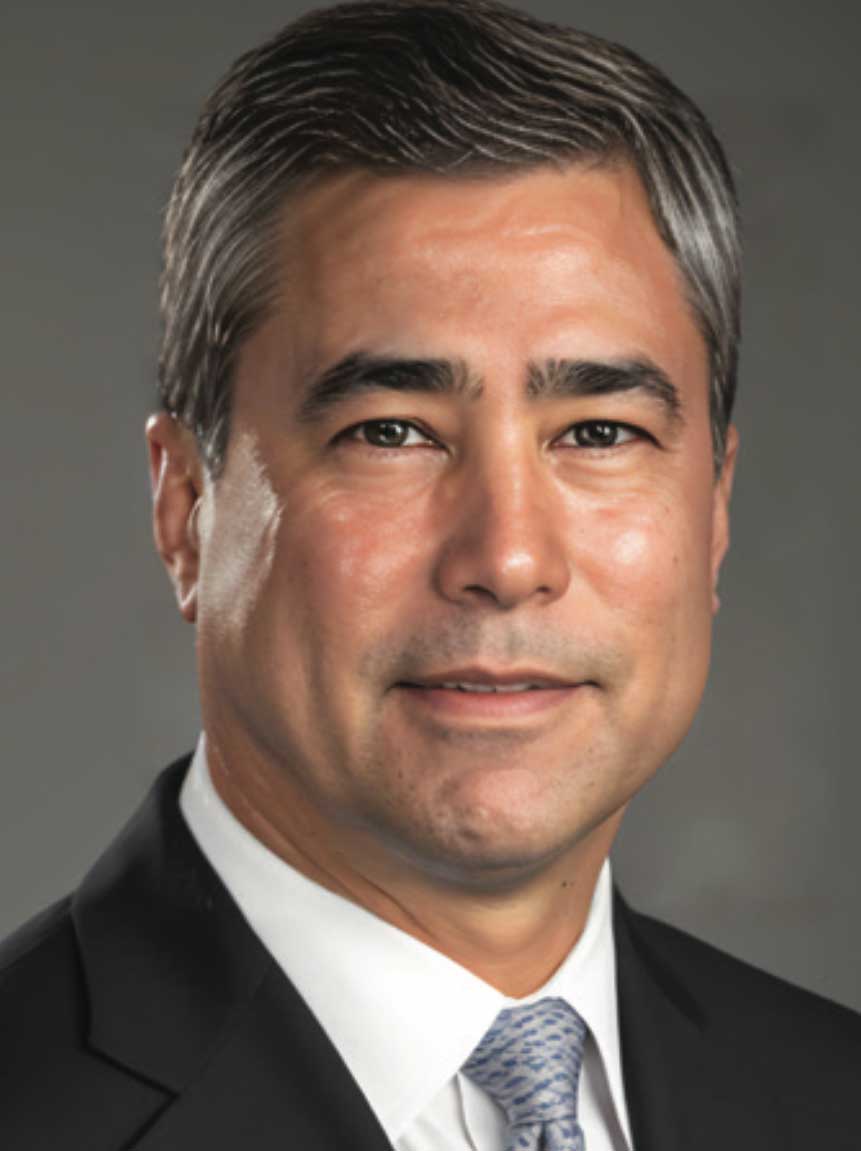
BRUCE NICKLE
Director-Global Supply Chain Logistics and Transportation
To help develop our company’s long-term growth and profitability, the teams collaborate and focus on continuous process improvement and short-, mid- and long-term planning.
In North America, the team on average coordinates 152,000 truckloads, 50,000 rail cars, 4,400 containers, and 300 hot shots and expedited shipments a year.
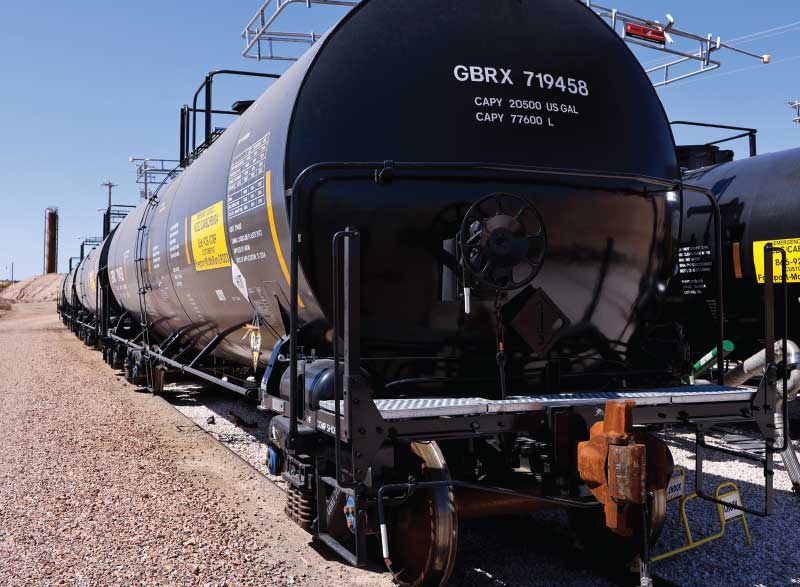
Freeport’s supply chain operation includes the coordination of 50,000 rail cars annually.