
VOL. 08 | ISSUE 2 | Summer 2025
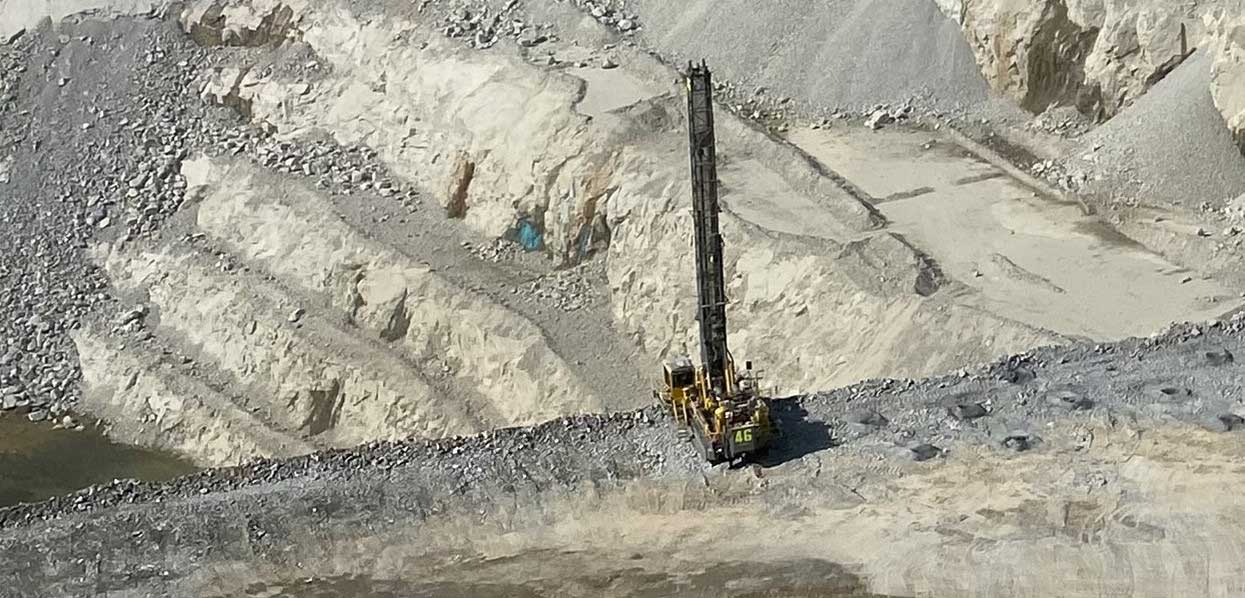
Autonomous drills are helping improve safety and efficiency at Cerro Verde operations today and will be used at other company mines in the future.
Drilling Down
Drilling
Down
Remote Drilling at Cerro Verde Providing
Insights for Future Use at North America Sites
Drilling blast holes at Cerro Verde looks much like it always has for David Grageda, Drilling Technician IV. He’s got a clear view of the work, and, with a quick glance, can assess his surroundings and the status of the equipment.
What’s missing makes the work so different. There’s no noise, dust or vibration. No operator’s cab. In fact, there’s no drill at all.
Grageda spends much of his time operating drills via remote control, sitting at a video display with a game-like controller in a special control room miles away from where the holes are being cut.
“The feeling is very different between working in the cabin and working in the control room,” said Grageda, who has 20 years of experience as a driller and has worked at Cerro Verde since 2012. “The feeling is not the same, but it’s very realistic.”
Cerro Verde is Freeport’s leader when it comes to automated drilling technology. Though it started several years ago on its own, the lessons being learned in Peru will provide important insights as the company embraces new technology and techniques to improve efficiency as part of its Reinvent Mining initiative.
Evolving technologies
Bagdad, Arizona, has gotten a lot of attention for its conversion to fully autonomous haul trucks this year. PTFI in Indonesia runs autonomous trains and semi-autonomous underground loaders.
Automated and remote drilling likely will be as important as haul truck automation in the future, especially at some of the company’s larger North America, said Bert Odinet, Senior Vice President and Chief Innovation Officer.
“It’s a component that is evolving for our industry that we think makes a lot of sense,” Odinet said. “If we are going to be a world-class miner, then we are going to need to take advantage of these technologies. It’s a logical evolution, and Cerro Verde is out front. We are going to learn a lot as we use them, and the technology evolves.”
Cerro Verde began semi-autonomous drilling several years ago with three bench remote drills, which require the operator to be close enough to see it to operate it remotely.
In 2023, the site added three Smart Roc MK-II drills and three of the larger Pit Viper drills, all of which can be operated from a distant control room and do not require a line of sight. One operator can run three of the remote-controlled drills at a time.
Last year, four fully autonomous Pit Vipers were added. They can be programmed to drill a certain pattern to a certain depth and then be left on their own to do the work.
Employee safety critical
Safety was the primary reason for pursuing remote technology, said Cesar Maldonado, Senior Supervisor-Mining Technology in Cerro Verde, who is leading the project.
“The drills operate very close to the slope,” Maldonado said. “We need to take care of our operators to avoid any incidents with them. After that, it’s for efficiency. We can use the remote and autonomous drills in shift change, at lunch time and in some blastings where the conditions allow the use of these drills.”
Cerro Verde still uses 10 manually operated drills. Operators are trained to use both standard and remote rigs. They also are involved in programming the autonomous drills.
Beyond safety, the precision and data generation from autonomous drills will be important as mining evolves in the future, Odinet said. An autonomous drill will bore in the exact spot to the exact depth that it is programmed to do, something even the most skilled humans can’t always achieve. The drills also collect extensive data in real time, which is vital to planning blasts to achieve optimal fragmentation. That, in turn, determines the efficiency of everything downstream like transporting and crushing.
“The equipment needs to enable the process, and to the extent that we’re getting better data off the process, we can adjust it and create more efficiencies,” Odinet said. “That’s the real goal. It’s not autonomy for autonomy’s sake.”
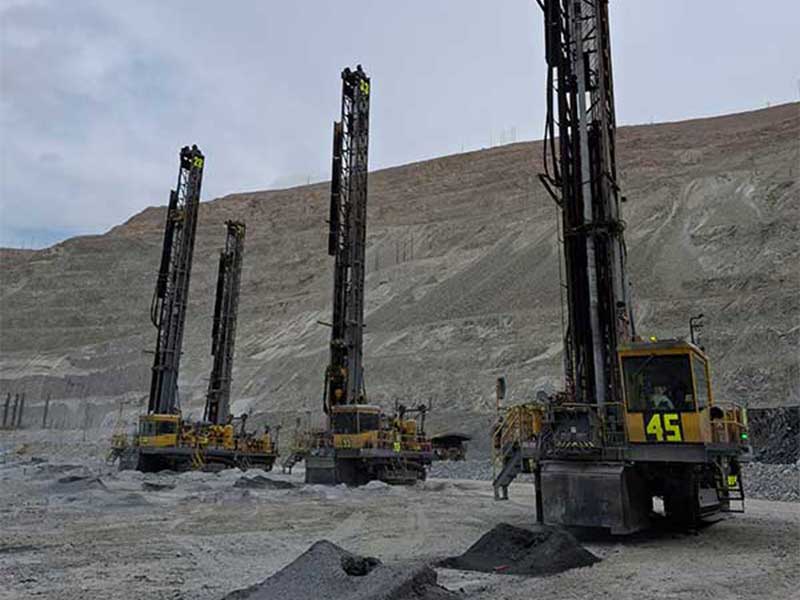
Autonomous drills can be programmed to cut in precise locations to an exact depth, something even the best equipment operator cannot always do.
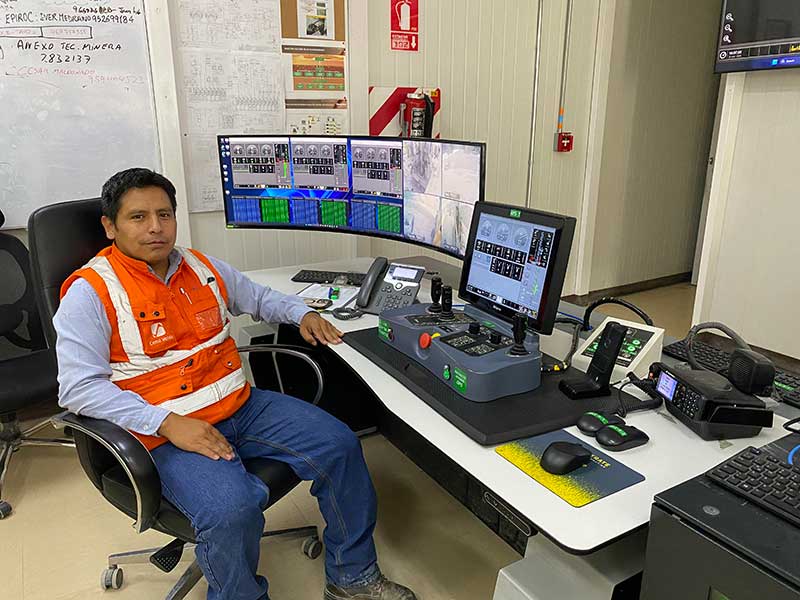
David Grageda is one of the operators who controls the remote drills at Cerro Verde.