
VOL. 08 | ISSUE 4 | Winter 2025 / 2026
Integrated Remote
Operations Center
Taking Shape
Integrated Remote
Operations Center
Taking Shape
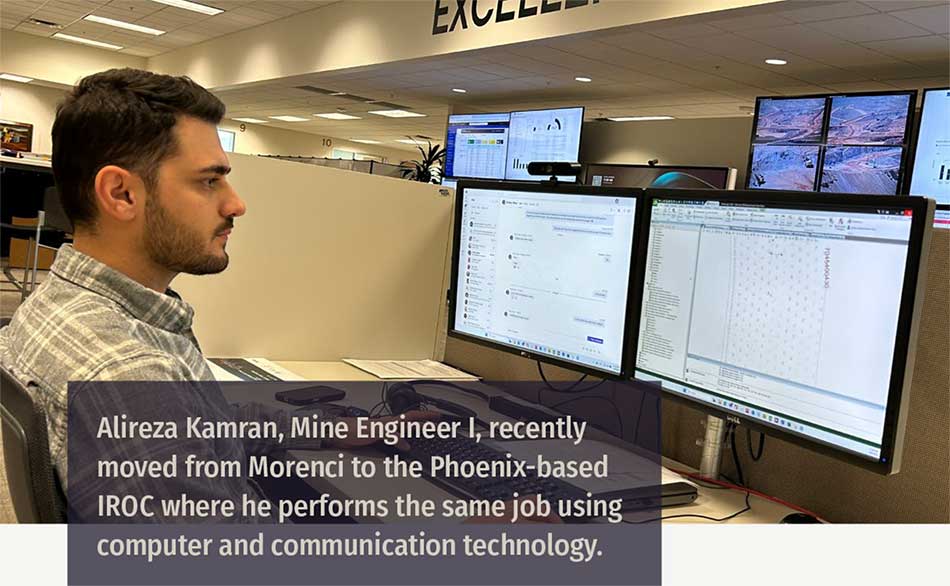
What Alireza Kamran needs is his training, expertise and a lot of data to design drill patterns that achieve optimal fragmentation at the Morenci mine.
What he does not need is to be anywhere near Morenci.
For the past two months, Kamran, Mine Engineer I, has been working out of Freeport’s Phoenix-based Integrated Remote Operations Center (IROC).
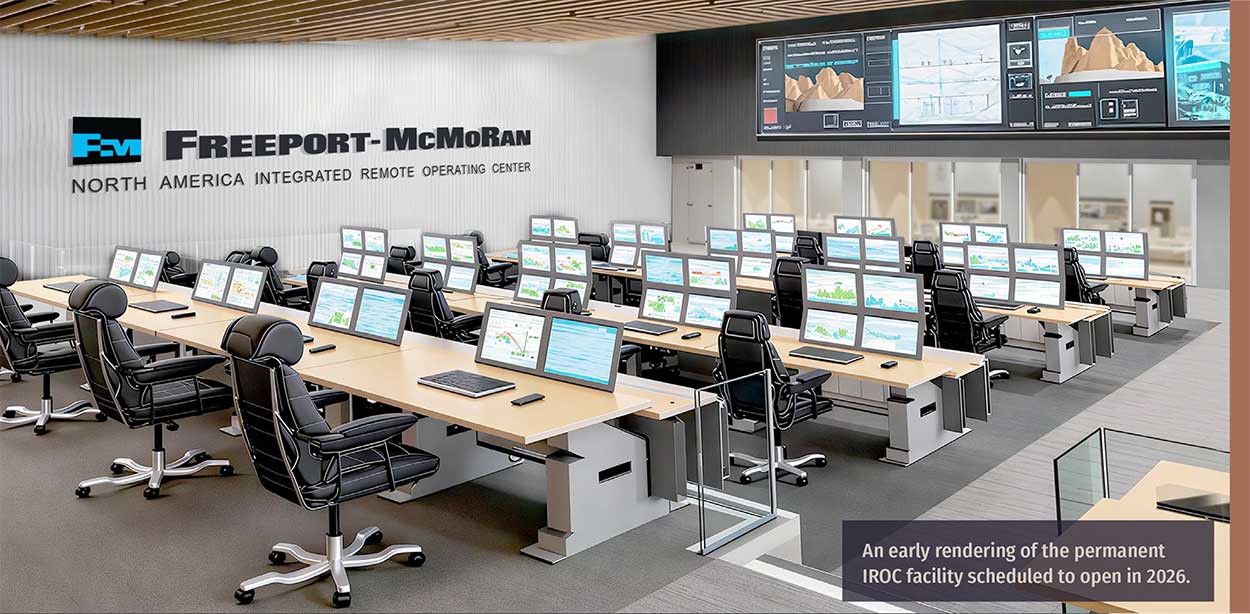
IROC is a centralized operating center that will consolidate certain functions common across North America mine sites that can be performed virtually. This new approach to managing equipment and operations will improve efficiency, provide better coordination and bring together specialists from various areas of production so they can solve problems in real time.
IROC is an important component of Freeport’s initiative to Reinvent Mining, embracing best practices and new technologies to cut costs, improve production and help ensure long-term competitiveness.
The move from Morenci was a good one, said Kamran, who joined the company nine months ago after receiving a doctorate in Mining Engineering from the University of Nevada, Reno. He relies on the same data feeds, video monitors and communications devices. But from a personal standpoint, the IROC allows him to live in Phoenix, which better suits his lifestyle.
“For a mine engineer nothing can be better than this,” Kamran said. “Mine engineers are usually in remote areas. I’m working at a big mining company, a famous mining company and in the corporate office of that company. It’s the best thing that can happen.”
Facility work progressing
For now, the IROC is housed in a temporary facility in the Zone at the company’s east Phoenix location. The permanent facility that will be built in the same office complex still is being designed with help from Hatch, a consulting firm that has extensive experience in creating similar facilities for other mining companies.
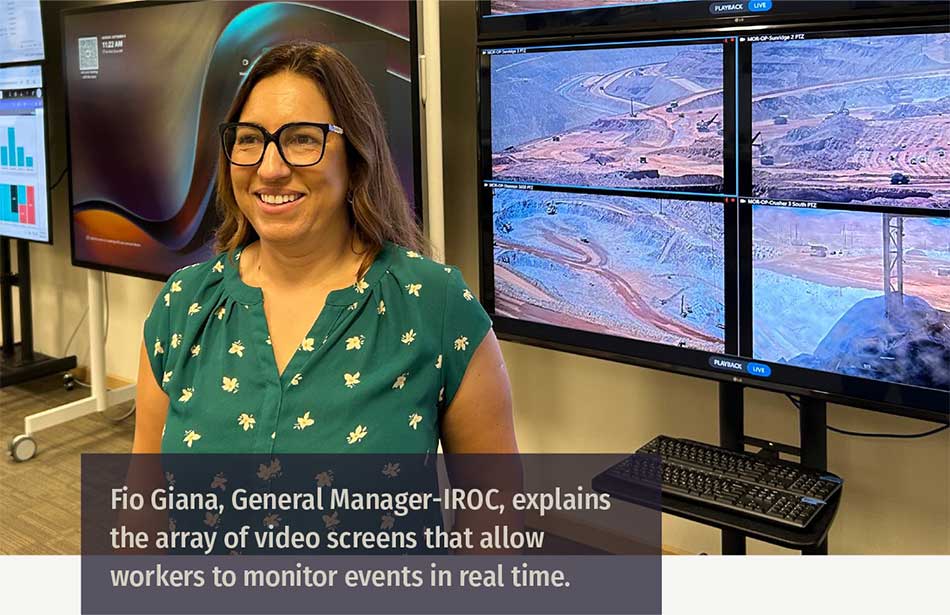
The jobs moving to the IROC do not require a physical presence at the mines but rather can be done from anywhere using computer and communications technology, said Fio Giana, General Manager-IROC.
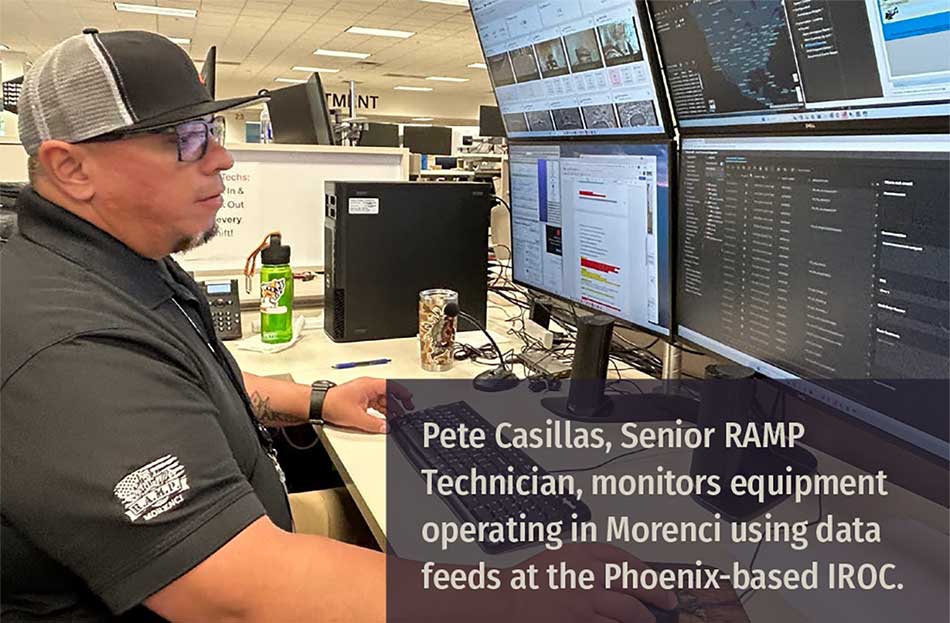
Currently, most of the people working at IROC are Remote Asset Monitoring Process (RAMP) technicians, who electronically monitor haul trucks, shovels and plants through an array of equipment sensors. There are four supervisors and about 36 RAMP technicians.
By the end of October, all RAMP monitoring for North America sites is expected to be done from IROC.
Pete Casillas, Senior RAMP Technician, said he was concerned when he first learned his job was moving to Phoenix. In his 28 years with the company, all of it working in Morenci, he’s been a shovel operator, haul truck driver and, for the last 10 years, a RAMP technician. He thought about going back into the field rather than moving from his home in Thatcher but chose to be on the “front lines” of mining innovation at IROC.
“I’m liking it,” Casillas said. “It’s still the same job but you are doing it in a different world at a different level.”
Completing the team
Also working in the IROC are four people from Morenci Fragmentation who design mine blasts. Geomechanical monitoring for Morenci also is scheduled to move to IROC by the end of the year. These are the people who monitor things like slope stability in the pit.
Still being designed is the position of Production Engineer. This essentially will be the one person on each shift who will synthesize all available information to make informed and immediate decisions to deal with unexpected circumstances at any given site to avoid production disruptions, Giana said.
Specialists from Hatch are working with teams on the ground in Morenci studying workflows and processes to define the role and responsibilities of production engineer. That should be done by the end of the year.
If IROC can be designed to support Morenci, the company’s largest and most complex site in North America, the lessons learned can be applied to any site.
“We want to chase value,” Giana said. “If we can put better technology in front of people making the decisions, so that they can make better decisions, we can achieve more value, faster. At that point, it’s just a volume calculation.”