
VOL. 08 | ISSUE 4 | Winter 2025 / 2026
Bagdad
Completes
Autonomous
Conversion
The project advances Freeport’s ‘long history’ of innovation
When the general managers of mines across Freeport Americas met to discuss the potential of autonomous haulage, one question led the conversation: Which site was best positioned to test the technology and take it to full-scale implementation.
Jeff Monteith, General Manager–Bagdad, knew the answer.
Bagdad struck the perfect balance – large enough to realize meaningful efficiencies yet streamlined enough to avoid the complexity that could stall a rollout. It was the ideal proving ground.
Monteith had another reason for believing Bagdad was the best place for Freeport to switch to driverless haul trucks.
“Bagdad has a very long history of innovation,” Monteith said. “That’s something that existed long before I got here. I was excited about the opportunity for Bagdad to actually take on that challenge. The team that we have here is devoted to innovation.”
Since the announcement in July 2023 that Bagdad would convert to fully autonomous haulage, that devotion to innovation has paid off.
All 33 haul trucks that will operate autonomously were fully converted and have been in service since August. Seven staffed trucks will operate through the end of the year to help meet production goals. After those trucks cease operation, Bagdad will be the only major mine in the United States with fully autonomous haulage. The company also has lived up to its commitment that no haul truck drivers would lose their jobs because of the conversion.
That success was achieved six months ahead of schedule.
Origins of autonomous
Many factors drove Freeport to adopt autonomous haulage.
In the aftermath of the COVID-19 pandemic, Freeport’s U.S. sites struggled to return to historical efficiencies. Staffing shortages were a problem, particularly at Bagdad, a remote site with limited housing.
At the same time, company leaders were exploring how best to prepare for future technologies such as electrification of haulage fleets that require precision that is difficult to achieve with staffed vehicles.
Bagdad was particularly well suited to implement autonomous haulage for reasons beyond its size and history of embracing innovation. The planned Bagdad 2X project will add a second mill and double the site’s output capacity. One limiting factor is finding enough workers to fully staff the upscaled operation.
Monteith said he knew there would be challenges in making driverless haulage work, and there have been . But he also knew from the start the historic importance of the work that would be done at Bagdad, and that overcoming the challenges would put his site and the rest of the company in a strong position far into the future.
“Personally, I felt that it was a tremendous opportunity to do something that hadn’t been done before, certainly within the organization, but also within the United States,” Monteith said. “Professionally, it’s always a bit of a risk taking on these large projects. There’s rarely a guarantee that everything is going to be successful. But Freeport as an organization does an extremely good job of supporting these large-scale initiatives, of which I’ve been a part of many. And all of them, through the cooperation of the company, have been successful.”
Bringing the project to fruition puts Bagdad in a good position to embrace new mining techniques and technology in line with the company’s Reinvent Mining initiative, said Randall Yubeta, Chief Engineering Specialist at Freeport.
“We view autonomous haulage and autonomy in general as an enabler for the future,” Yubeta said. “There are a lot of unknowns on what that future is going to look like. But we definitely have a feeling that automation in our operations is going to be a key piece in enabling what comes.”
“We view autonomous haulage and autonomy in general as an enabler for the future.”
RANDALL YUBETA | CHIEF ENGINEERING SPECIALIST
Upgrading the system
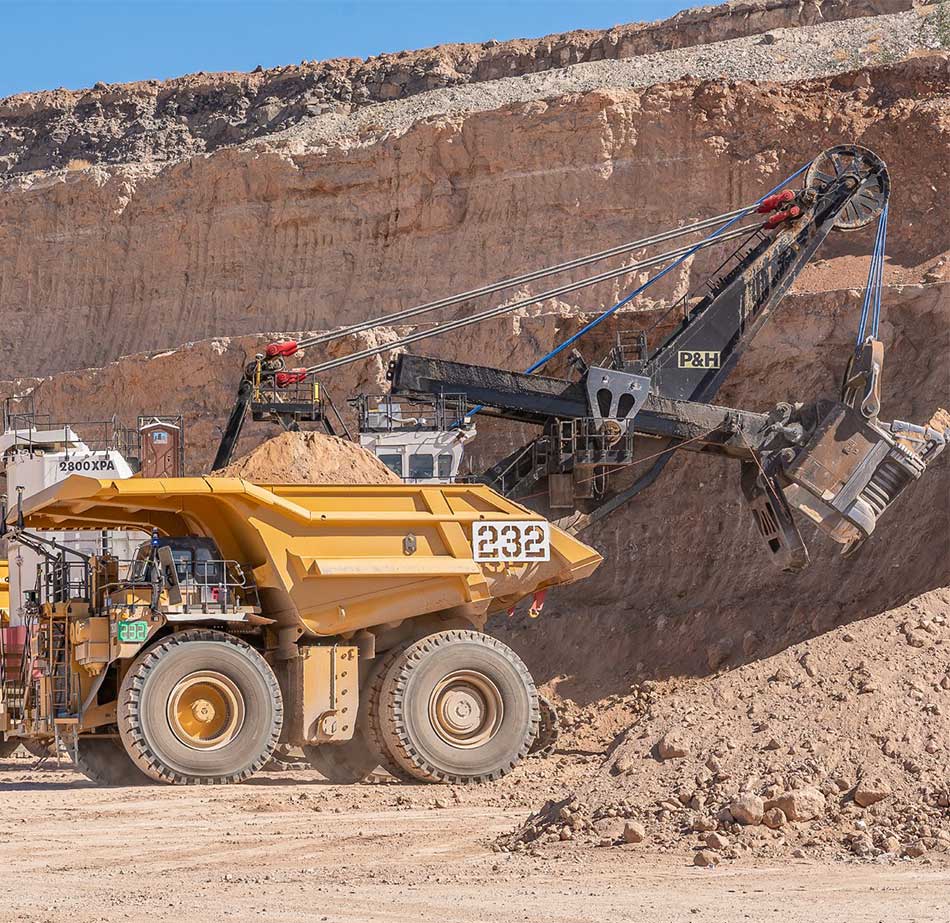
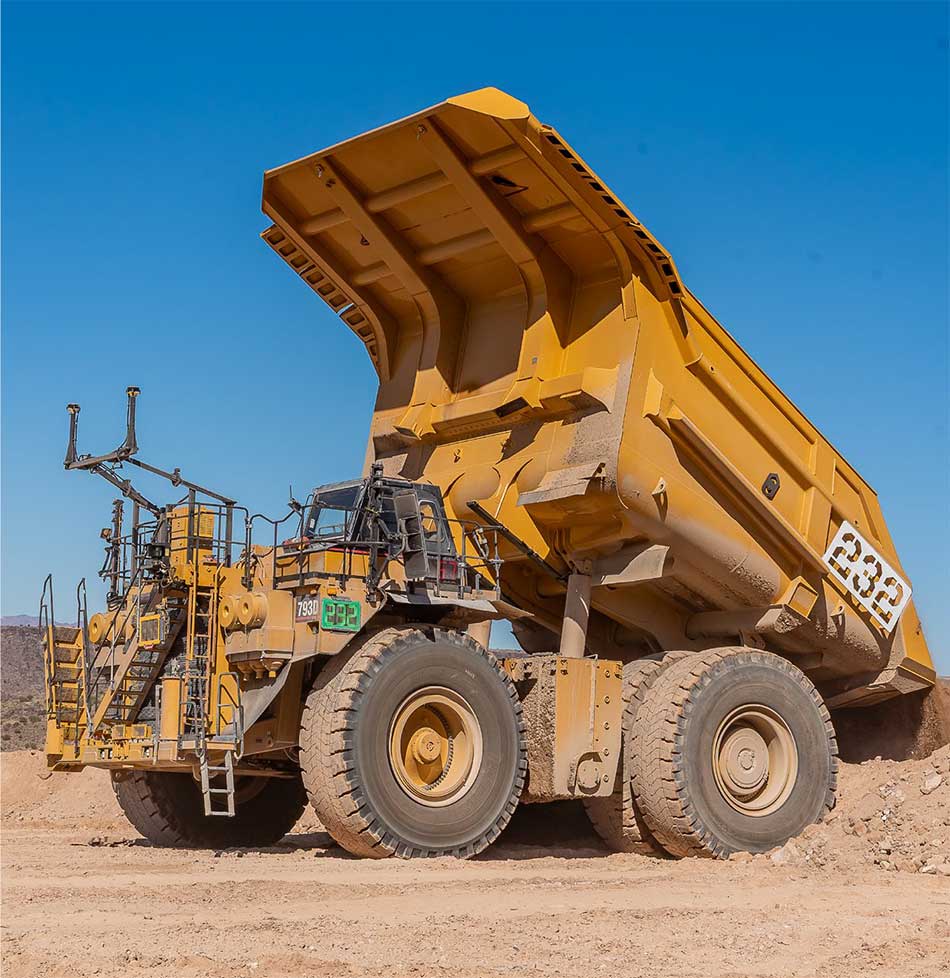
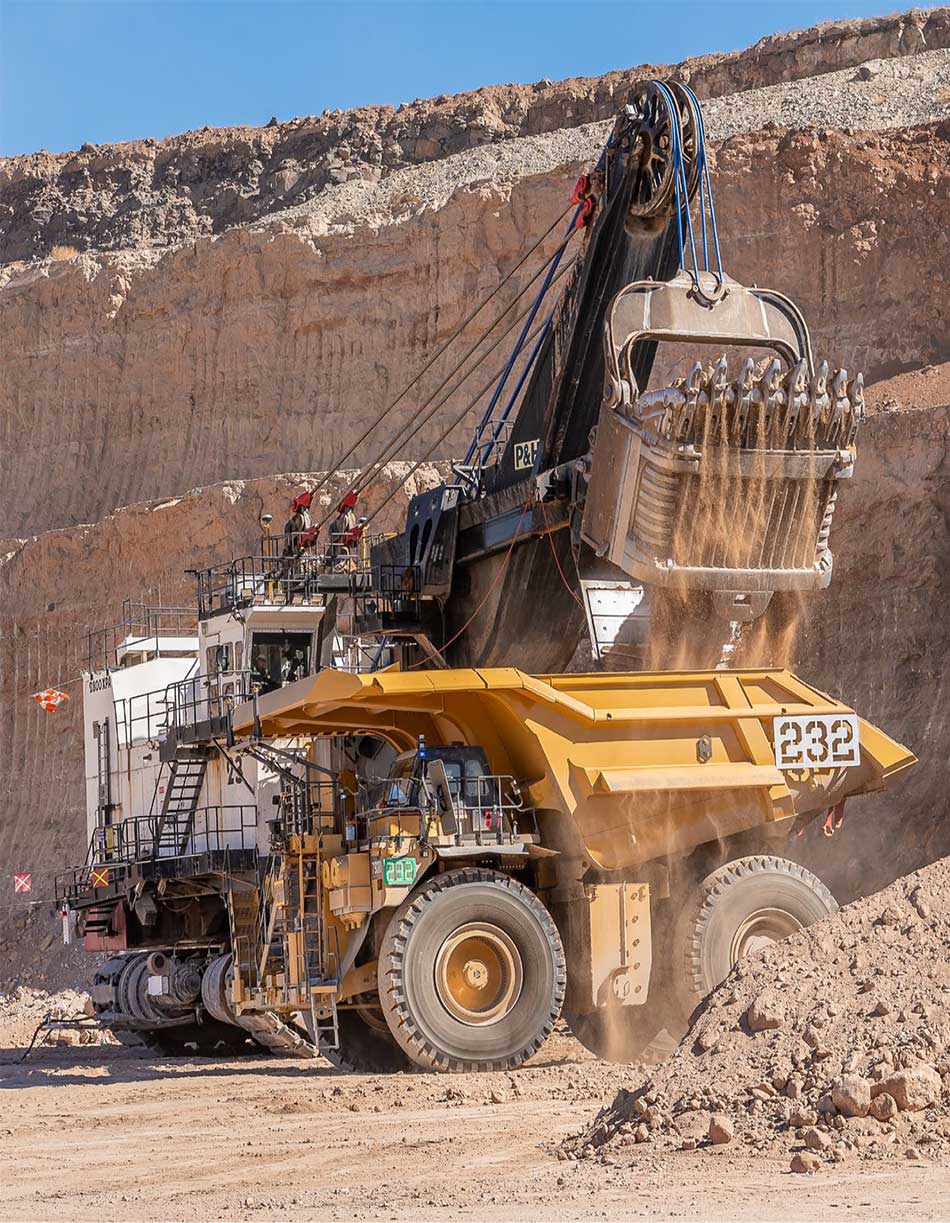
Preparing for autonomous was a two-year process that involved retrofitting the trucks and the entire mine site with an array of sensors, communications systems and other high-tech gadgetry that allow the trucks to operate on their own.
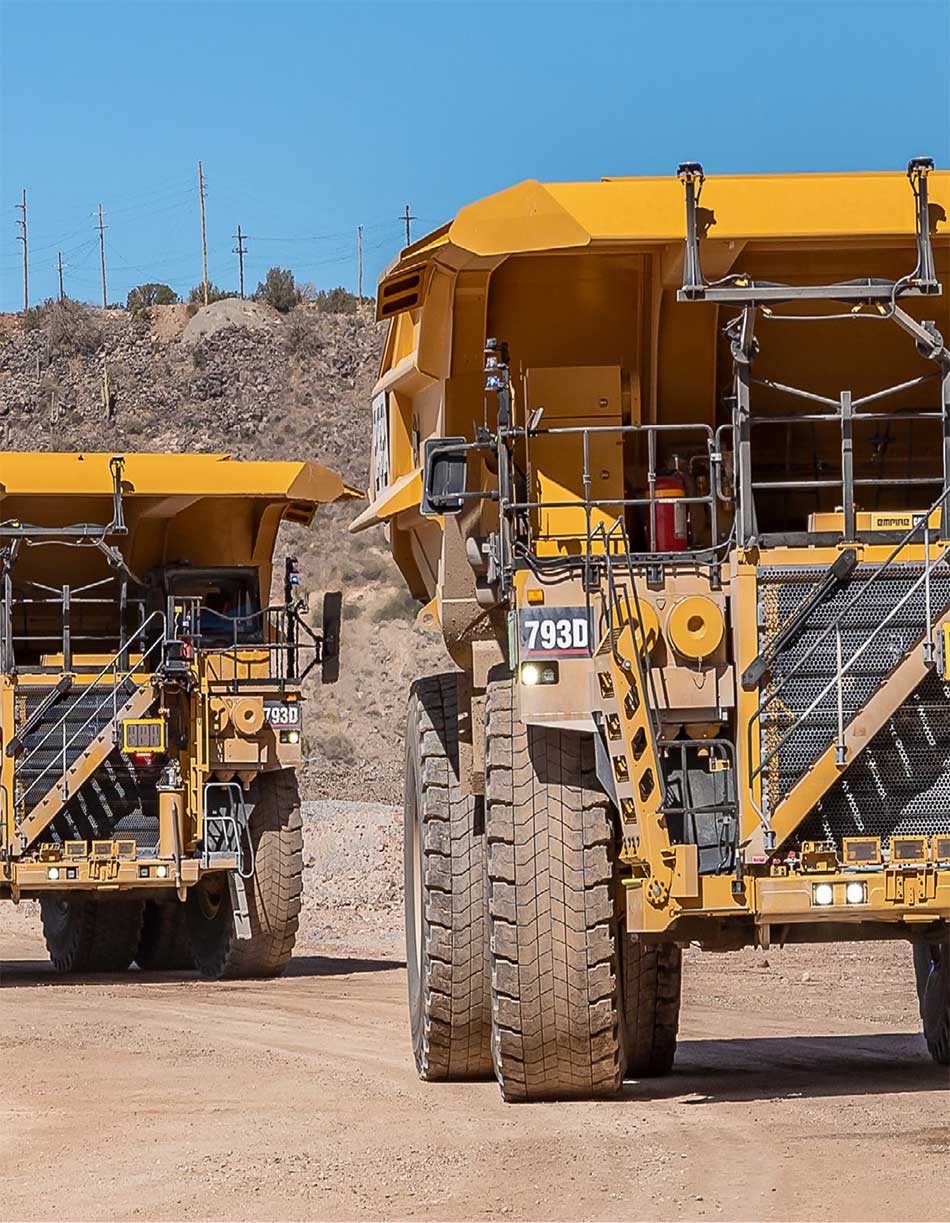
All the trucks underwent a two-stage conversion giving them new steering and braking systems, front wheel assemblies, and a variety of sensors and computer controls that allow them to operate without drivers.
Beyond retrofitting the haul trucks themselves, extensive site improvements were required to make the autonomous system function. A new command center was built to monitor and control the trucks, communications and data transmission networks were upgraded, roads were widened, and an isolated autonomous operating zone was created to minimize human interactions with the driverless vehicles.
October 1 was the official close-out date for the implementation phase of the project, said Mark Elliott, Project Manager. Now, the focus is on continuous improvement.
Continuing to learn
The learning continues as everyone at Bagdad strives to maximize efficiency and hit production expectations, Elliott said.
The predictability of the autonomous system has exposed shortcomings in other areas that in the past might have been glossed over through human intervention.
As site operators gain experience with the autonomous system efficiency, production gains will follow, Elliott said. Asset efficiency and tons moved per day showed improvement in November.
“It’s very much a learning curve,” Elliott said. “The team here, including myself, continues to learn new things about how to efficiently operate. And I think those learnings are going to continue for the next year, at least, on how to efficiently operate and learn all the nuances within the autonomous system.”
Bagdad's Road to Autonomous Haulage
The Bagdad Autonomous Haulage System (BAHS) project was announced, with expected completion by the end of 2025. This will make Bagdad the first mine in the United States with fully autonomous haulage. As part of the announcement, the company includes its zero-job loss goal, meaning no haul truck drivers involuntarily will lose their jobs because of the conversion.
The first round of one-on-one meetings with the more than 200 haul truck drivers begins. This is an initial step in ensuring they will find other jobs at Bagdad or, if they prefer, transfer to other Freeport sites and continue driving.
The first two autonomous trucks are put into service and begin receiving their first load of materials as part of user acceptance testing. The trucks pick up full loads at a shovel and transport the material to a waste dump.
The new command center begins operations to provide real-time visibility and control to enhance safety, efficiency and communication for the BAHS. Two more autonomous trucks are put into full-time service, raising the total to four. By the end of March, six autonomous trucks are operating.
Bagdad completes site infrastructure improvements to create an autonomous operating zone to isolate driverless haul trucks from staffed vehicles operating at the site. Included is a pair of tunnels – among the most costly and challenging projects – needed to allow the site to convert to exclusively autonomous haulage. Other site improvements include road widening, and upgrades to communication and data transmission capabilities. By the end of May, 15 autonomous trucks are operating.
All 33 autonomous haul trucks are operating in addition to seven staffed vehicles. Putting all autonomous trucks into service was achieved six months ahead of schedule.
As of early October, almost 20 million tons of material had been moved by the autonomous fleet. The implementation phase of the autonomous haulage system is considered completed with site-wide recognition. The focus shifts to improving efficiency and production. The company has met its zero-job loss goal. Retraining and job placement continue today.
The staffed trucks will stop operating at the end of the year, and Bagdad will be the first major mine in the United States to switch to fully autonomous haulage.