
VOL. 09 | ISSUE 1 | Spring 2026
Smarter,
Faster
Smarter
Faster
Freeport Using Artificial Intelligence to
Deliver Smart Results in the Real World
Across Freeport’s operations, artificial intelligence is quietly at work.
It monitors the health of haul trucks, refines chemical blends in leach stockpiles and even helps review job applications. The result is more metal, lower costs and better-informed decisions.
AI helps technicians make haul trucks and fixed equipment last longer by interpreting the steady stream of machine health data generated by thousands of sensors. It also refines chemical blends to extract more copper from leach stockpiles and in the mill. And it supports teams in reviewing job applications, streamlining parts of the hiring process.
“It’s critical to our present,” said Brian Etheridge, Director, General and Administrative Architecture-MIS. “It really does change the way people work. Decision making becomes more proactive. The collaboration around problem solving improves. The outcomes and the actions we need to take become clearer, and we have a much richer conversation about how to optimize our business instead of just focusing on how we gather our data and how we reconcile our reports.”
One area where AI has been particularly useful is data analysis in operations, said Robert Catron, Director, Global Data and Analytics-MIS. A constant stream of data is generated throughout the company, whether it be from sensors monitoring machines or from laboratory testing to determine the geological makeup of a particular ore sample.
AI can compile the information, analyze it and generate recommendations on how best to proceed, Catron said.
More than a decade ago, the company launched the Remote Access Monitoring Process or RAMP, laying early groundwork for the use of AI in operations. The system uses sensors and analytics to monitor haul trucks and other equipment, helping improve reliability and extend equipment life.
“The outcomes and the actions we need to take become clearer, and we have a much richer conversation about how to optimize our business instead of just focusing on how we gather our data and how we reconcile our reports.”
BRIAN ETHERIDGE | DIRECTOR | GENERAL AND ADMINISTRATIVE ARCHITECTURE-MIS
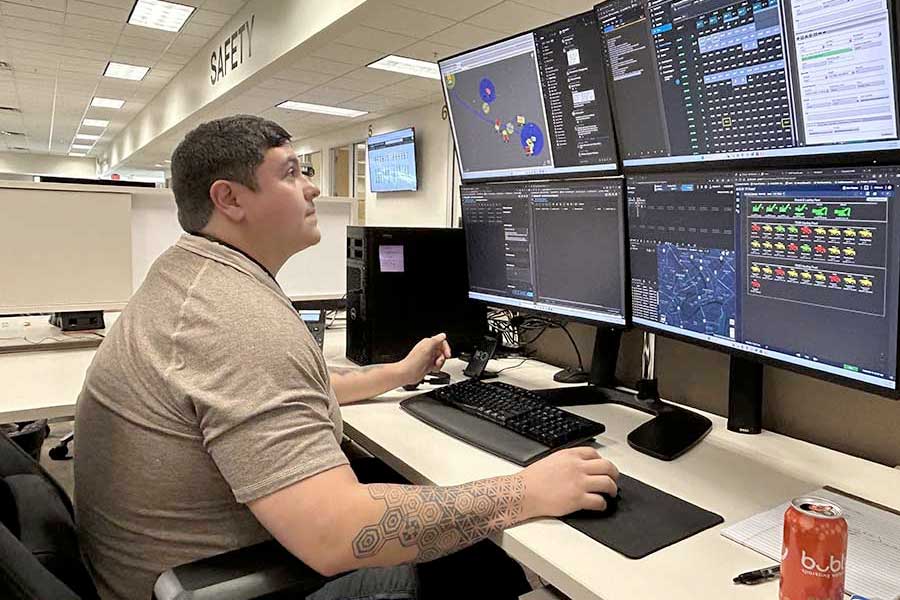
Today, RAMP incorporates AI to give technicians early warning of potential issues or breakdowns. Data from sensors on haul trucks and other equipment like crushers and conveyors is sent to the Integrated Remote Operations Center in Phoenix, where RAMP monitors performance in real time.
More Pounds and Less Costs
Artificial intelligence has been integrated into Freeport’s operations over time, helping decision makers move from identifying problems to solving them. Examples include:
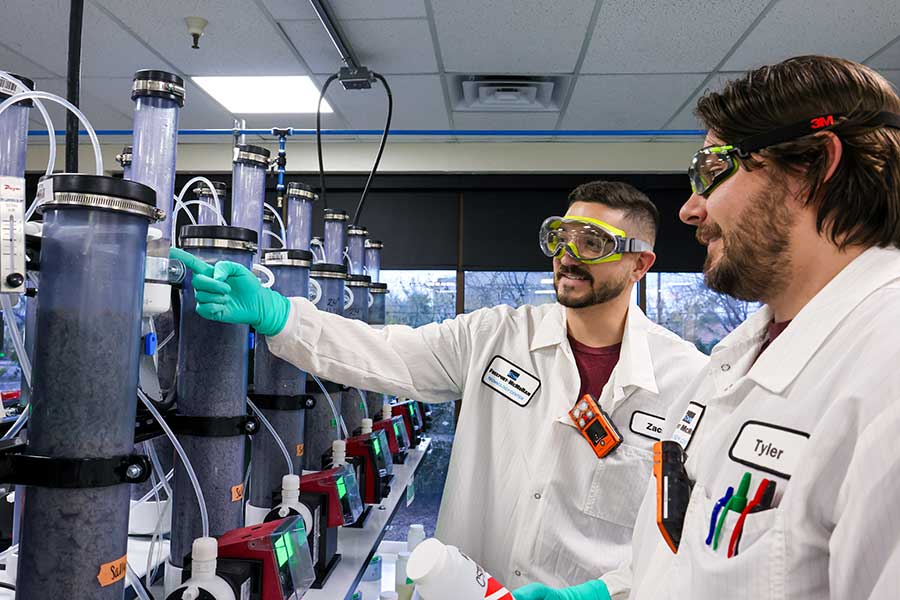
- Additive development. AI is being used to accelerate the leaching process by identifying chemicals, or combinations of chemicals, that improve cost-effective copper recovery. Using advanced modeling, AI helps researchers pinpoint high-potential additives more quickly, allowing them to test and deploy promising solutions faster than traditional methods.
- Americas’ Concentrator. This was an AI-driven initiative aimed at increasing copper production by improving efficiency at existing concentrator facilities in the Americas. Using data from sensors and laboratory analysis, AI evaluated the material entering the concentrator. As ore grades and geologic characteristics shift, the system helps determine the most efficient way to process it, from blast design and fragmentation to crushing size, chemical concentrations and leach times.
- General administrative functions. AI is being used across areas such as finance, supply chain and recruitment to streamline routine work. It handles repetitive but necessary tasks, such as reviewing large volumes of resumes to identify candidates who best match job requirements. AI also serves as a research tool, scanning materials in multiple formats and delivering concise summaries.
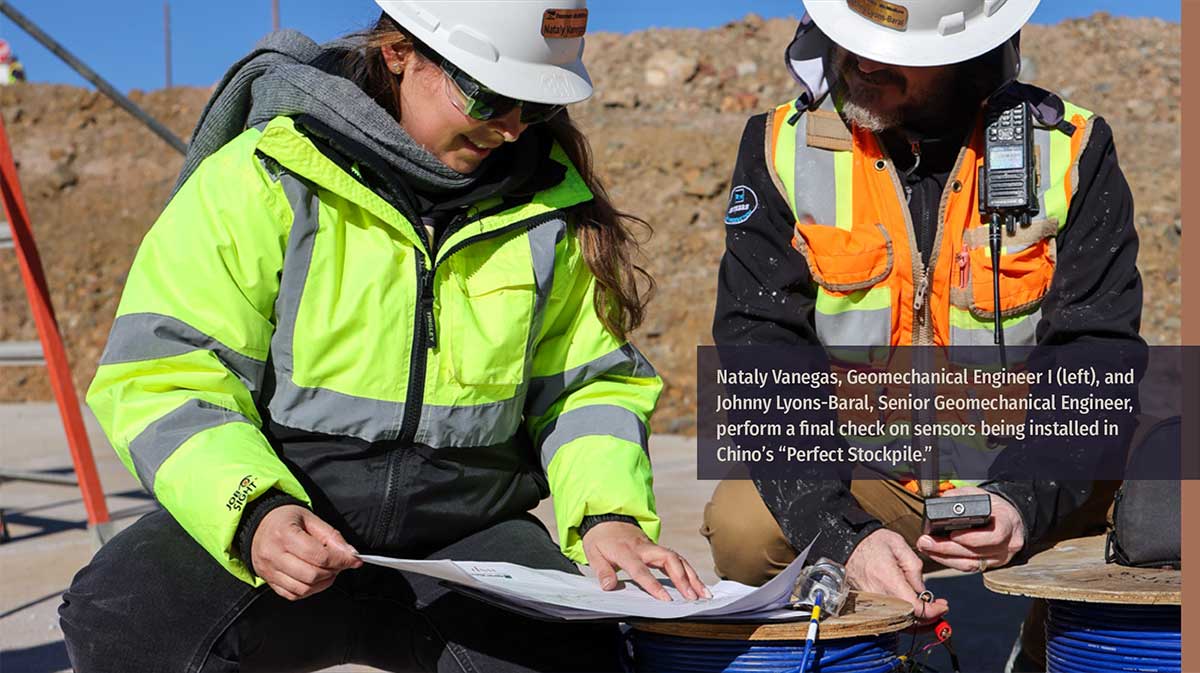
- Leach to the Last Drop. An initiative focused on extracting more copper from existing stockpiles by improving saturation and fine-tuning the use of heat and chemicals. Sensors embedded in the stockpiles track temperature, oxygen levels, acid flow and other conditions. That data feeds into an AI-driven computer system known as HELENA, short for Heap Leach Analytics. HELENA analyzes the information to identify and refine optimal leaching practices.
Beyond continuously monitoring data for signs of potential failure, AI creates a digital twin of each piece of equipment. The virtual model mirrors how the equipment operates in the real world, allowing the system to predict performance and flag issues before they escalate.
This helps technicians determine whether an alarm signals a critical problem that needs immediate attention or a minor issue that can be addressed at the end of a shift or during routine maintenance.
The latest AI addition to RAMP, known as the RAMP Agent, goes a step further. Instead of simply analyzing data and predicting potential issues, it can initiate action by automatically generating work notifications for maintenance planners to review and schedule.
“RAMP at its base capability is delivering information to humans so they can make a decision,” Catron said. “With the RAMP Agent, AI is taking the data, doing the interpretation itself without a human and then independently taking corrective action on its own. This frees up time for our employees to focus on the hardest problems we have to solve. This technology unlocks that.”
In every instance, AI is a tool to help make employees more productive by giving them information and options so the people can make the best decisions, Etheridge said.
“We are not looking to reduce people, but we are looking to reduce cost,” Etheridge said. “AI plus human is better than either individually. AI is not going to replace our employees. It’s going to move their activities up the value chain.”
“With the RAMP Agent, AI is taking the data, doing the interpretation itself without a human and then independently taking corrective action on its own. This frees up time for our employees to focus on the hardest problems we have to solve.”