VOL. 09 | ISSUE 3 | Fall 2026
Healthy Boost
Chemical Additives Helping Unlock
Millions of Pounds of Copper
An amino acid commonly found in animal feed is helping to unlock millions of pounds of copper from stockpiles in Morenci.
The chemical additive – called Reagent A – is cheap, readily available and shows great promise in boosting copper recovery on existing stockpiles through Freeport’s Leach to the Last Drop initiative, said Rosemary Blosser, Manager-Processing Operational Improvement. It currently is being applied to two stockpiles at Morenci.
Since application began in April 2025, the product has delivered more than 11 million pounds of copper that otherwise would not have been recovered through other leaching methods, Blosser said.
Other additives also are being studied for their potential to boost copper production even more, either alone or in combination with other chemicals or heat applied to the raffinate or stockpiles. One particularly promising prospect – called Falcon – boosts copper recovery far beyond what the chemical itself or the heat applications produce individually. The additive’s name describes production through the process “taking off like a falcon.”
Reagent A is being applied to stockpiles where concentrations of chalcopyrite make much of the material unsuitable for traditional leaching, said William Paddock, Manager, Leaching-Morenci.
Separately, heated raffinate is being tested on a third stockpile. No testing is being done with heat and additives together yet.
“These additives really unlock the potential to produce copper from those stockpiles. It’s still early to say but that has the potential to really impact what is economical to mine.”
WILLIAM PADDOCK | MANAGER, LEACHING-MORENCI
Accelerating recovery
Additives that will unlock copper from chalcopyrite are seen as critical to the success of Leach to the Last Drop, the company’s effort to boost copper production from existing stockpiles by 800 million pounds annually by 2030. This year, the effort is expected to produce a run rate of about 300 million pounds of copper tied to the new leaching techniques.
“With the size of Morenci and the number of stockpiles that we have, we have a lot of historical copper contained in those,” Paddock said. “These additives really unlock the potential to produce copper from those stockpiles. It’s still early to say but that has the potential to really impact what is economical to mine.”
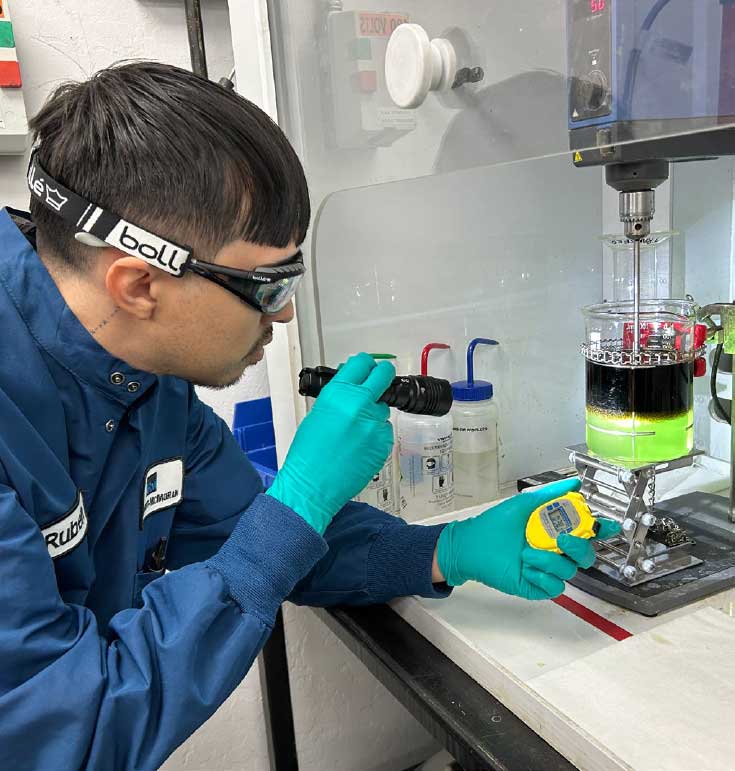
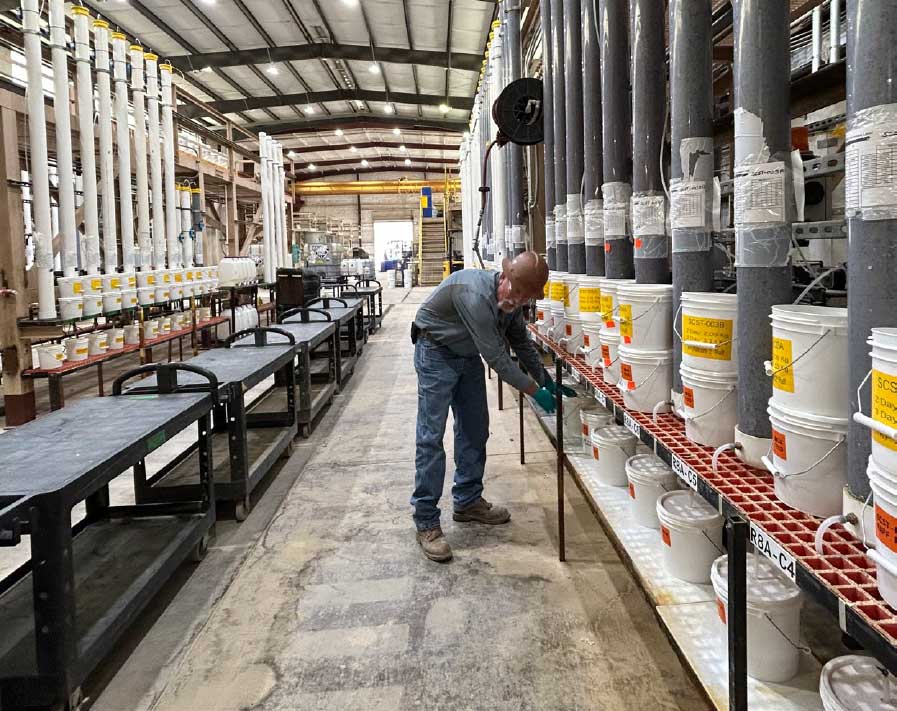
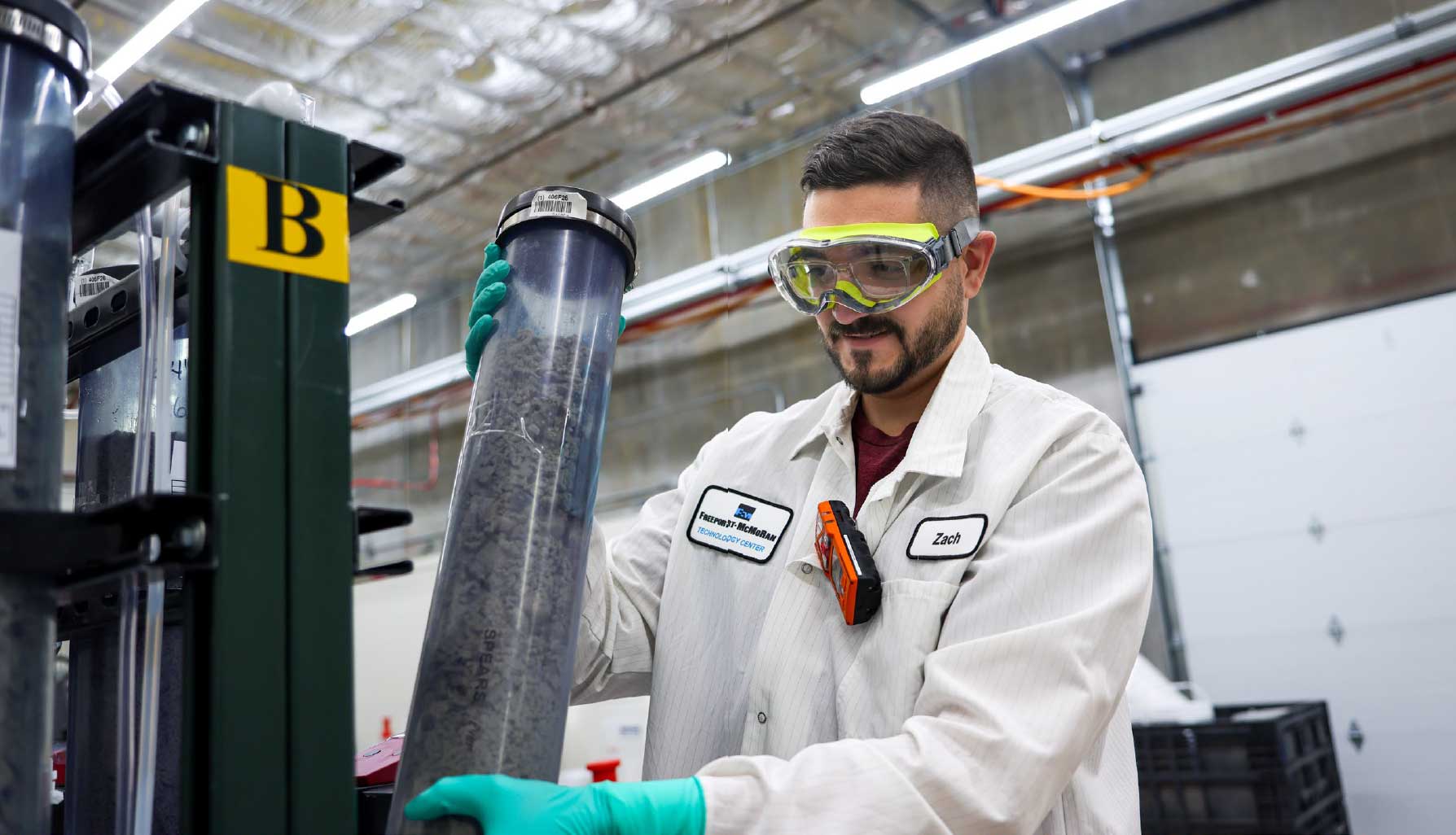
Since additive testing began in 2021, more than 100,000 different chemicals were examined, Blosser said. Some compounds did not exist and were created by Freeport chemists.
Reagent A has been among the most successful. It boosts copper recovery from chalcopyrite to about 21 percent from about 15 percent. That six-point increase comes solely from the chemical addition to the raffinate that is applied to the stockpiles, Blosser said. No other leaching modifications are needed, and Reagent A is compatible with existing leaching operations.
Finding the right leaching additive is an intensive process that involves years of research and testing. Artificial intelligence is used to help analyze data and predict outcomes.
Morenci success
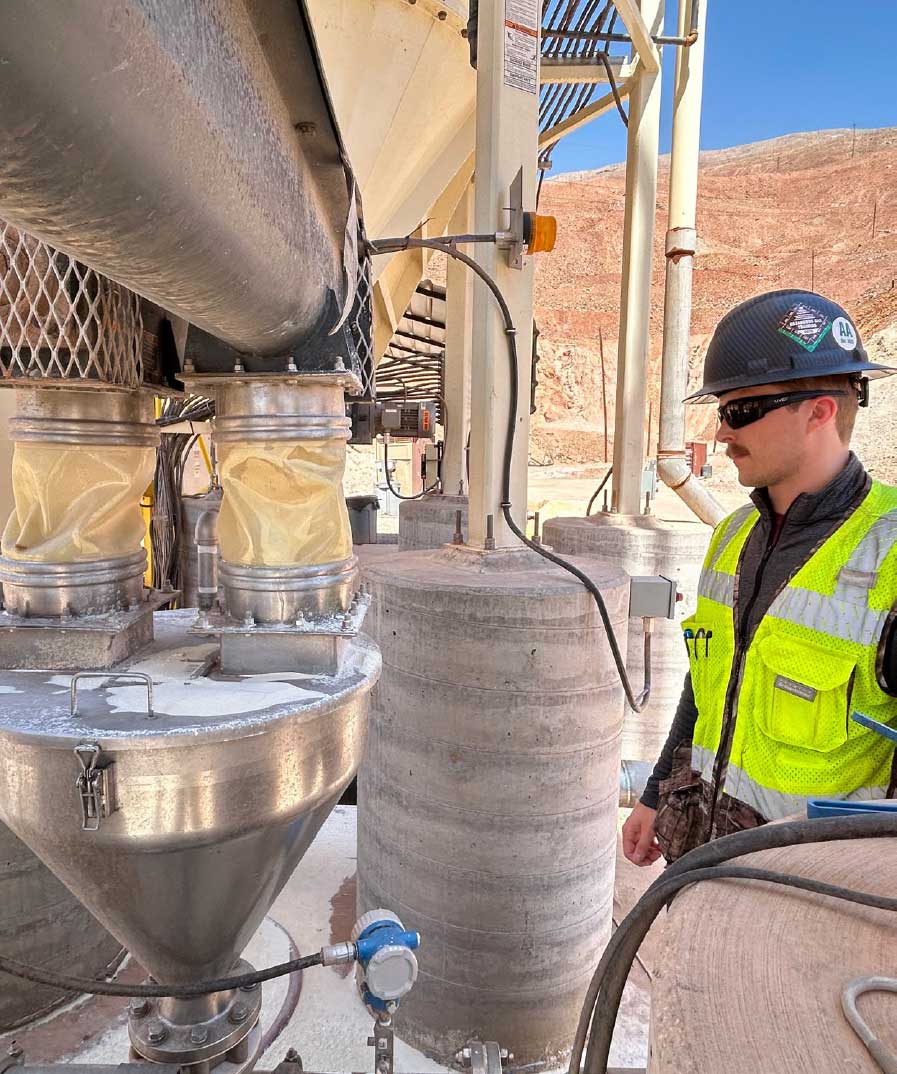
The first application of Reagent A was on the Lower Chase Creek stockpile in Morenci in early 2025. Success there prompted the decision to begin applying it to a second stockpile, the King Placer, beginning in February. Both have isolated raffinate application systems that allow the effects of the additive to be gauged without cross-contamination from other stockpiles, Paddock said.
When Leach to the Last Drop was launched, unidentified additives were expected to account for about 25 percent of the projected production increase – more than 200 million pounds annually, said Robert Crossman, Director-Leach to the Last Drop.
Beyond the effectiveness of an additive, cost and availability also are important, Crossman said. This chemical in Reagent A is cheap and readily available – a supplement used primarily in chicken feed. Falcon is not readily available and is expensive, though that could change with demand driven by a large-scale mining operation.
“Anything under the current price of copper makes additional money,” Crossman said. “That being said, we are committed to using Leach to the Last Drop to lower our overall unit cost. So, the goal would be to make the pounds cheaper than we’re making them today.”
“Anything under the current price of copper makes additional money.”
ROBERT CROSSMAN | DIRECTOR-LEACH TO THE LAST DROP
When Leach to the Last Drop was launched, unidentified additives were expected to account for about 25 percent of the projected production increase – more than 200 million pounds annually.