VOL. 09 | ISSUE 3 | Fall 2026
Where Mining
Begins
Freeport Explorers Use Modern
Technology, Prospector Instincts
in Quest for New Discoveries
Everyone knows X marks the spot when it comes to buried treasure.
Finding X is the job of Freeport’s exploration department.
To do that, the team uses an array of technology, including artificial intelligence, to sift through pretty much anything that can be digitized and turned into data. That might be the latest results from modern geologic and metallurgical analyses. Or it could be a 200-year-old map hand-drawn by some long-forgotten prospector.
The exploration team – performing a lesser-known but essential company function – always is on the hunt for the next major discovery, something comparable to the Grasberg deposits discovered by Freeport in Indonesia in 1988. But the team also spends much of its time exploring around existing mines in the Americas to identify new copper deposits and better understand the ore bodies already being mined.
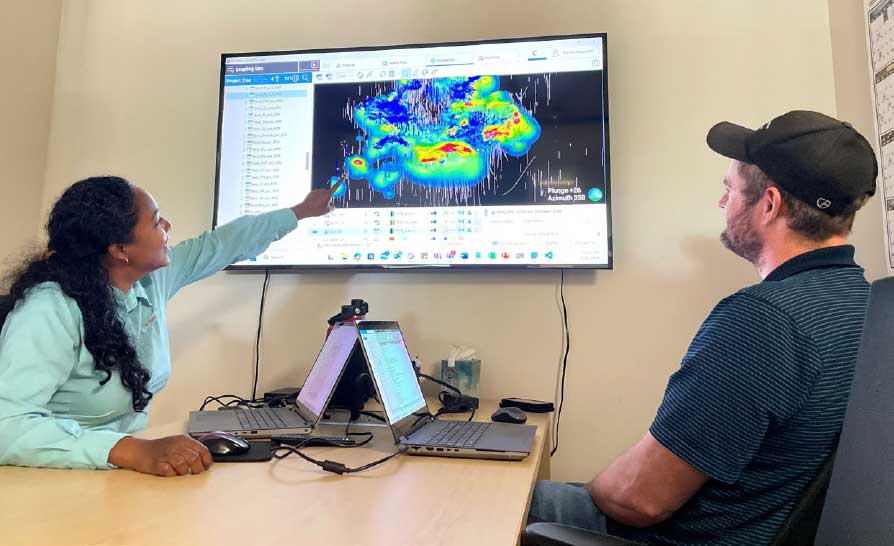
Much of the work is high-tech. Geologic surveys, metallurgical testing and even things like magnetic and spectral analysis collected using helicopters or satellites provide data. So does every bit of available information that can be scraped and digitized from other sources through an in-house system called the Atlas Targeting System. That includes things like results from previous exploration or scientific reports, government records, even narratives and maps from early explorers and prospectors.
It is all done on a global scale and includes both internal Freeport material and whatever other relevant information can be obtained and digitized.
Everything gets fed into a massive database to be analyzed using AI and other data-crunching tools.
The ultimate purpose is to get the information to savvy people within the company who have the knowledge, experience and instincts to pull it all together and identify the top prospects for further investigation, said Mac Canby, Senior Vice President-Exploration.
“We layer all that stuff up and then, looking through those layers with a prospector’s experienced vision, we can see that things line up to point to X on the map,” Canby said. “We’ve developed a method that is AI-supported to go out and scrape the world and to boil that down into a set of criteria that says basically, ‘go look here.’ Ultimately it is X marks the spot. Perhaps someday AI will be putting X on the map. Right now, it’s just creating the map that the smart people can go look at.”
“We’ve developed a method that is AI-supported to go out and scrape the world and to boil that down into a set of criteria that says basically, ‘go look here.’ Ultimately it is X marks the spot. Perhaps someday AI will be putting X on the map. Right now, it’s just creating the map that the smart people can go look at.”
MAC CANBY | SENIOR VICE PRESIDENT-EXPLORATION
Searching for spectacular finds
Freeport’s exploration department always is on the hunt for the undiscovered mother lode. Sometimes, it does its own search to identify spots with high potential for a strike, Canby said.
Where it makes sense, Freeport will partner with another trusted company that specializes in mineral exploration, with that firm doing the field work and Freeport maintaining optionality to get more or less involved, depending on how the find pans out.
In those instances, Freeport brings the expertise and capital needed to develop a new mine if the discovery proves worth the investment. If not, Freeport always keeps a path to reap value from a minor stake in the venture or sell its interests, Canby said.
Freeport has a history of striking it big with new discoveries around the world. One recent discovery currently being evaluated shows great potential.
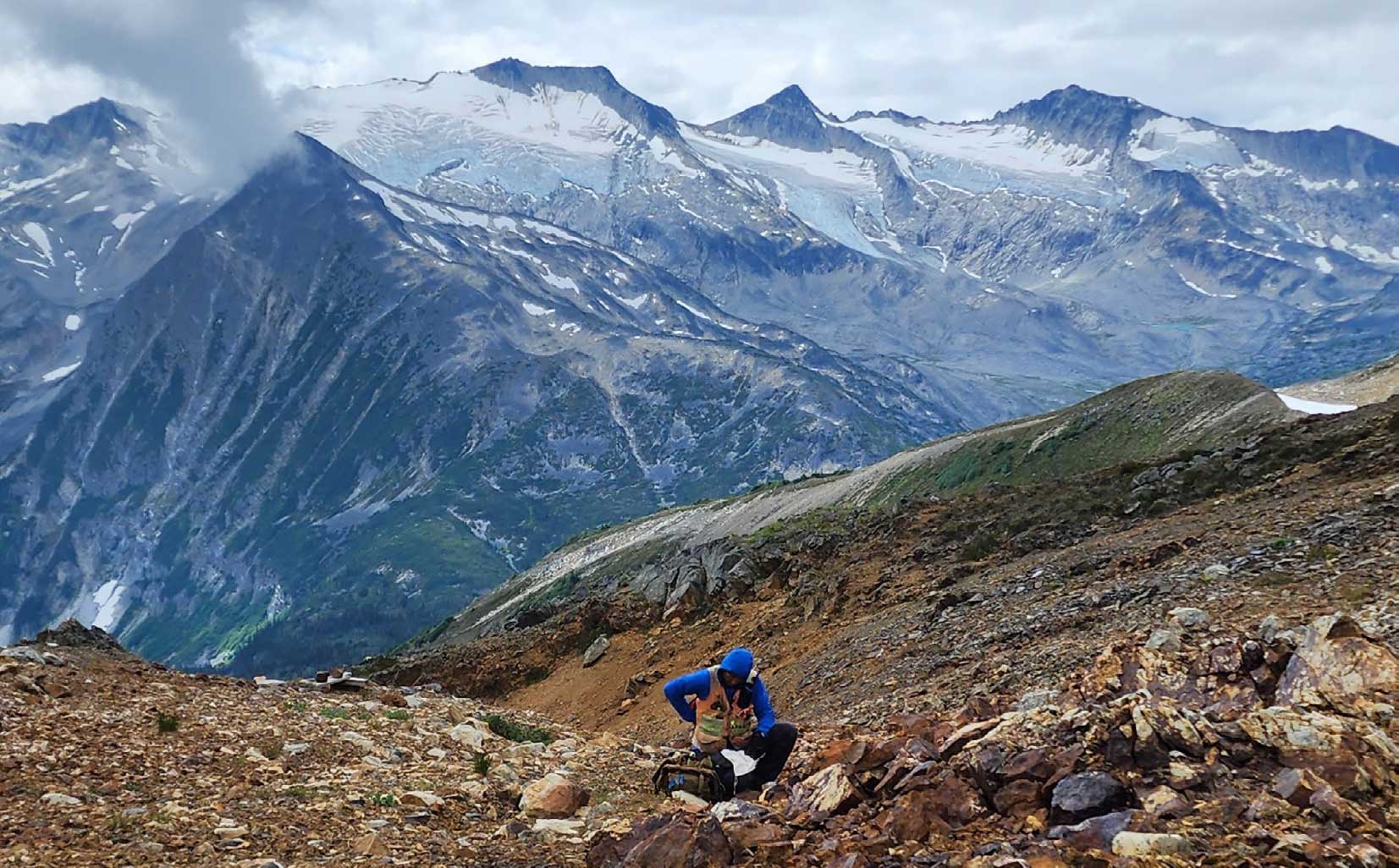
The Joy project in Canada has returned some “spectacular” results, Canby said. It was discovered in 2024 through a joint venture Freeport is part of. While promising, more testing is needed to determine whether the amount of copper and gold it is likely to produce justifies the massive investment of building a new mine in the remote wilderness.
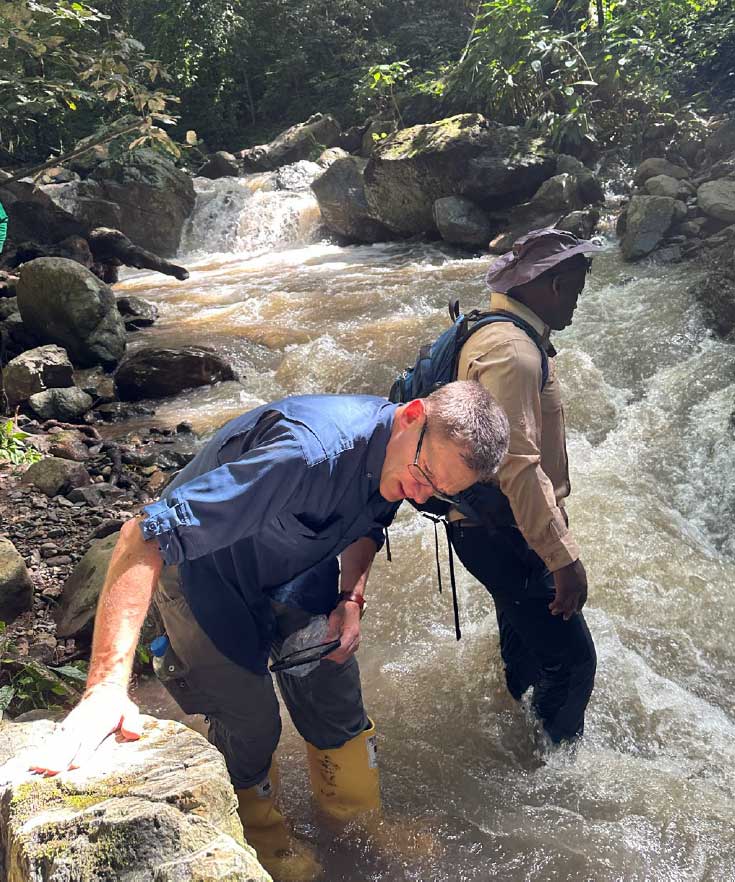
Freeport also is involved in a project in Colombia where numerous outcroppings of high-grade copper ore recently were discovered. That project still is in the early assessment phases.
Maximizing what’s already found
The original Grasberg discovery in 1988 illustrates another trail Freeport’s exploration team always is following: new deposits near existing mine sites. Freeport had been involved in the now-closed Ertsberg mine for more than 20 years when the rich Grasberg ore bodies were discovered a couple of miles away.
In the United States, the exploration department is assessing land around existing mines to determine whether more quality deposits remain undiscovered. It also conducts extensive tests to map ore bodies being mined to provide data to determine the best way to extract and process the material. This is where the combination of AI and modern sensors is generating new data for other Freeport teams to “get the most value from those beloved rocks,” Canby said.
Freeport’s exploration department always is on the hunt for the undiscovered mother lode. Sometimes, it does its own search to identify spots with high potential for a strike.
New discoveries near old sites can extend the life of a mine that otherwise might not be profitable because of low or declining ore grades. It also can be mined and processed using existing facilities like mills and concentrators, minimizing development costs.
“You don’t want to make a discovery and then find out we can’t actually operate there. We’re not afraid to say no. Even though the geology is the hottest in the world, if you can’t operate there, you don’t proceed.”
MICHAEL HUEHNE | GENERAL MANAGER, ADMINISTRATION-EXPLORATION
Balancing risks and rewards
Finding X does not mean it’s time to start digging.
Even the richest strikes might not be feasible to develop, and due diligence is required from the start to identify potential hazards, said Michael Huehne, General Manager, Administration-Exploration.
Remoteness, limited resources like water, environmental restrictions, ownership issues, opposition from local communities or security concerns might also derail even potentially big discoveries.
Huehne and his group work to identify potential risks and work with various stakeholders to determine whether they can be resolved.
“You don’t want to make a discovery and then find out we can’t actually operate there,” Huehne said. “We’re not afraid to say no. Even though the geology is the hottest in the world, if you can’t operate there, you don’t proceed.”