VOL. 08 | ISSUE 1 | Spring 2025
Freeport Sites
Set New Records
Freeport Sites Set New Records with Focus on Data,
Maintenance and Reliability
Company sites across the Americas are setting new records as intense efforts to improve efficiency and safety are paying off with increased production.
Last year, new annual, monthly and daily records were set for parts of the business ranging from stacking rates to mill throughput and safety.
-
The Sierrita mill and the Miami smelter set annual production records in 2024.
-
Bagdad set a record for molybdenum produced as well as several new annual, quarterly and monthly records in molybdenum processing.
-
Cerro Verde had the lowest Total Recordable Incident Rate in the site’s history.
Sierrita is coming off its best year ever for throughput, with an average annual rate of 112.3 kilotons per day. That includes a record fourth quarter and back-to-back historical months in November and December.
“It started with the Americas’ Concentrator Project about five years ago. That’s when we identified things like keeping the stockpile full and improved blasting practices. That led us to a study where we looked at our maintenance practices and unlocked another 7,000 tons a day. After that, we kept going.”
GRAHAM COOPER | CONCENTRATOR MANAGER
The site averaged about 500 tons per day more in 2024 than its previous record, which had been standing since the late 1990s. Concentrator Manager Graham Cooper said the achievement is the result of a series of incremental improvements made over the course of several years and across every corner of the site.
“It started with the Americas’ Concentrator Project about five years ago,” he said. “That’s when we identified things like keeping the stockpile full and improved blasting practices. That led us to a study where we looked at our maintenance practices and unlocked another 7,000 tons a day. After that, we kept going.”
Heading into 2024, Sierrita tightened the screen panels at the crusher to produce a finer material for the mill. Then, to take advantage of the finer crush, the team made the steel balls in the ball mills smaller. This resulted in another 3,000 tons of throughput a day. They then adjusted their water addition strategy and upgraded their grinding control model.
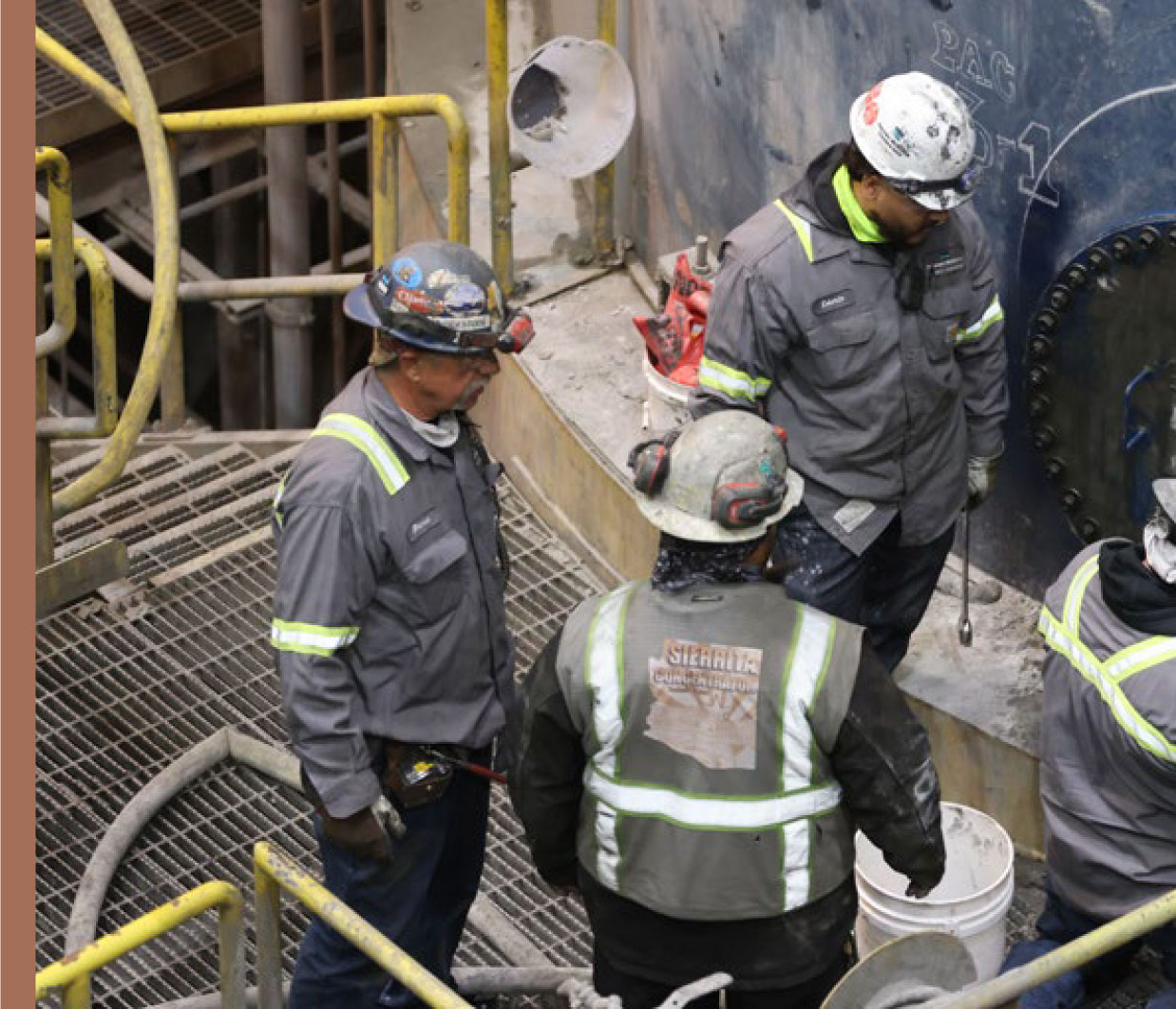
Sierrita now is in the process of rewriting what its maximum capacity can be. A number of factors account for the impressive increases.
“That tells me it is everything,” Cooper said. “Every little thing has come together, and you can’t isolate one from the other.”
At Miami, throughput of concentrate at the smelter reached 927 kilotons last year, a new record. This is the third consecutive year that Miami set a record. Mark Albertsen, General Manager, credits his predecessor, Miguel Palacios, now Vice President–FM Smelting and Refining and Senior Vice President–Business Development for Atlantic Copper, who envisioned “The Road to 1 million” in 2020 and put the site on the path to achieve it.
“The key factors in obtaining these results were sharing the vision with our employees and getting them to believe it was possible as well as having a solid and robust maintenance and reliability scheme, which relied heavily on data to support decision making as well as short-term and long-range planning,” Albertsen said. “We focused on our theme: safe and consistent operations. The team has done an amazing job getting results that no one thought was possible.”
Other North America site records and achievements in 2024 include:
- Bagdad achieved a record monthly mill throughput in September.
-
Morenci Hydromet set a new monthly record for the flow of pregnant leach solution in December, increasing production in support of Leach to the Last Drop.
-
Safford set a new quarterly stacking rate record in the fourth quarter – its highest annual stacking rate in 12 years.
-
Chino achieved a 75.2 percent haul truck asset efficiency.
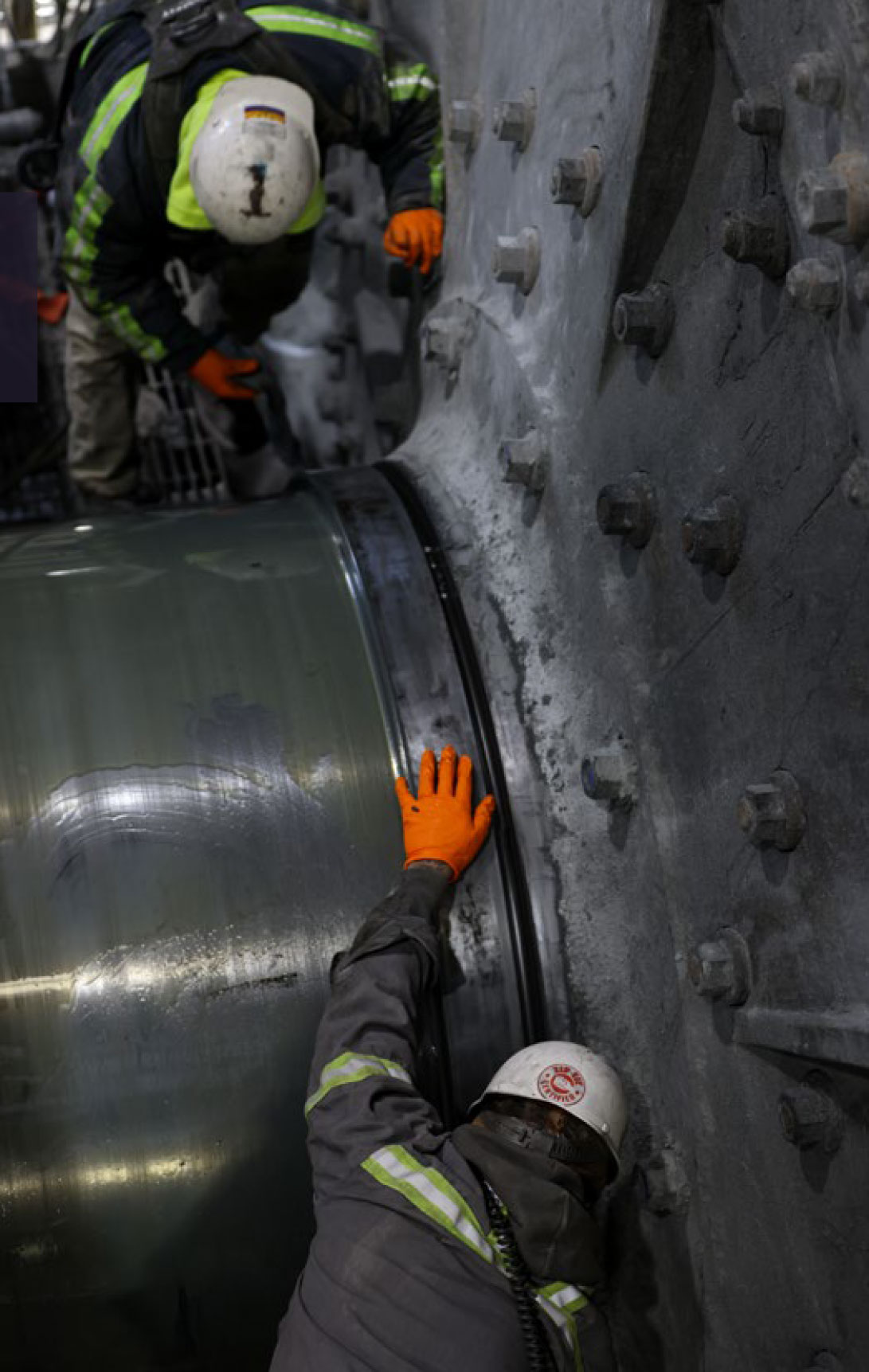
Workers prepare a trunnion for inspection as part of Sierrita’s reliability-centered maintenance, which helped produce annual, quarterly and monthly records at the mill.
New Tool Breaking Production
Bottlenecks with Data
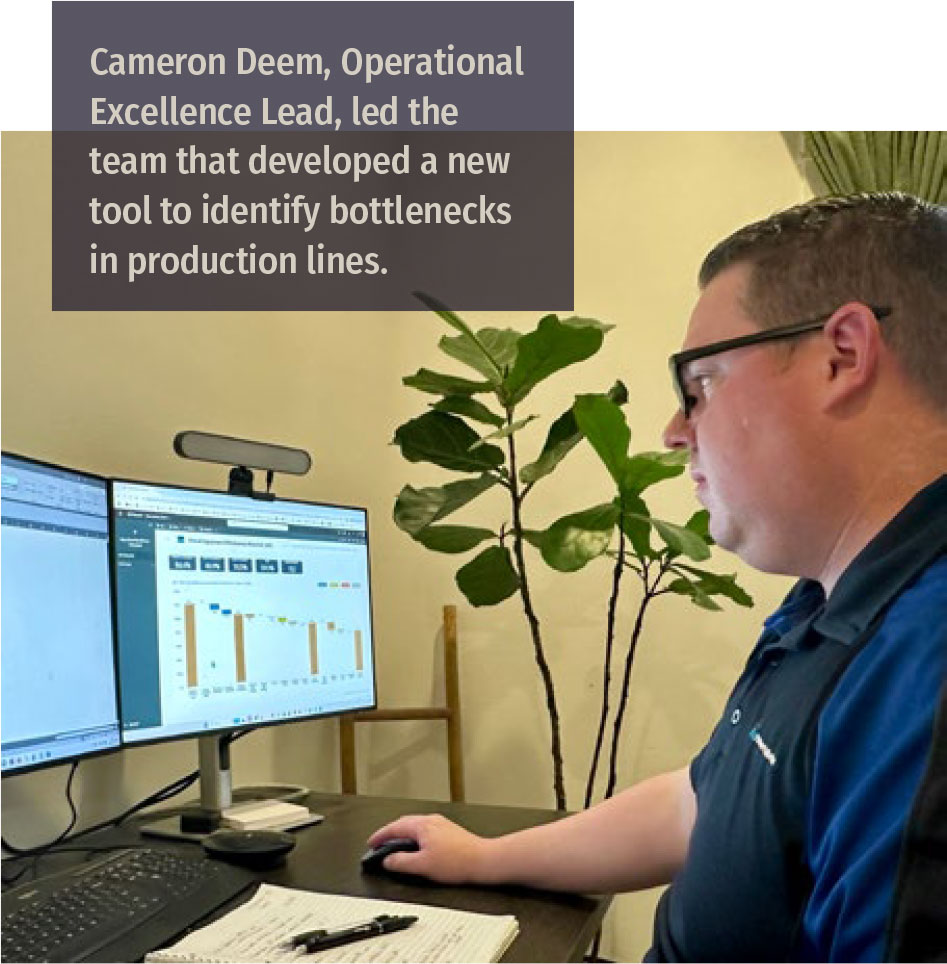
A new data tool to help break production bottlenecks by specifically identifying the slow spots in the operation has been developed by the company’s Operational Excellence department and is being rolled out to site managers.
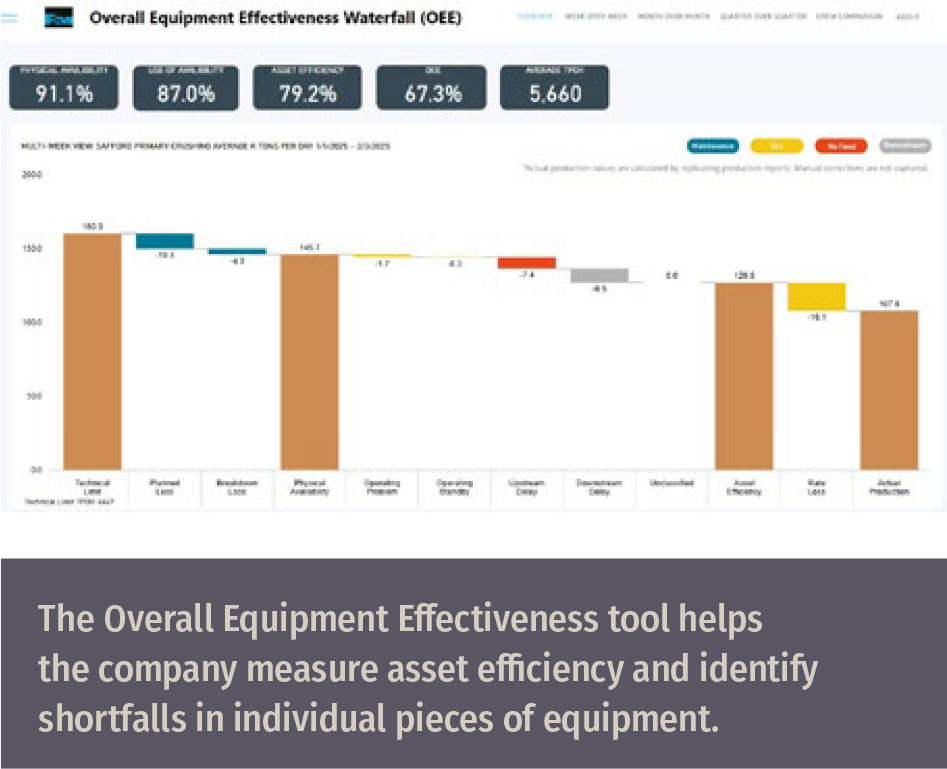
The Overall Equipment Effectiveness tool is intended to pinpoint problems that are costing pounds, said Cameron Deem, Operational Excellence Lead, who led the program development.
“The tool helps you identify areas of loss in tons per day, but it also helps you identify where you need to optimize,” Deem said.
The analysis starts with the full capacity of an individual machine based on its prior operating experience. Equipment downtime, planned and unplanned, is factored in. So are things like operational delays, both upstream and downstream.
For instance, the ball mill might be unable to reach its full capacity if the crushers are not operating at their peak. That, in turn, might be because there are not enough haul truck drivers or shovel operators to feed material at capacity. In either case, the problem may not be in the ball mill but rather shortfalls in getting enough material delivered for processing.
All the information is analyzed, and the lost productivity is calculated with specificity. The new system analyzes both mechanical and operational deficiencies so they can be corrected. It can be applied to any piece of equipment and is being used now on primary crushers, fine crushing plants, concentrators and haulage fleets in the United States. It is being rolled out in South America this year.
The process is automated using data already collected. The tool was two years in development. It will be particularly useful for senior supervisors, superintendents, managers, reliability and technical service engineers—anyone trying to identify how to wring the most out of the production line, said Lisa Brown, Manager–Operational Excellence.
“It’s not all the details you need, but it definitely is the information you need to start asking the right questions,” Brown said. “It has really enabled the superintendents and senior supervisors to have conversations about what’s really preventing them from making their production numbers.” ■
“The tool helps you identify areas of loss in tons per day, but it also helps you identify where you need to optimize.”
CAMERON DEEM | OPERATIONAL EXCELLENCE LEAD